Group by use, not only by appearance
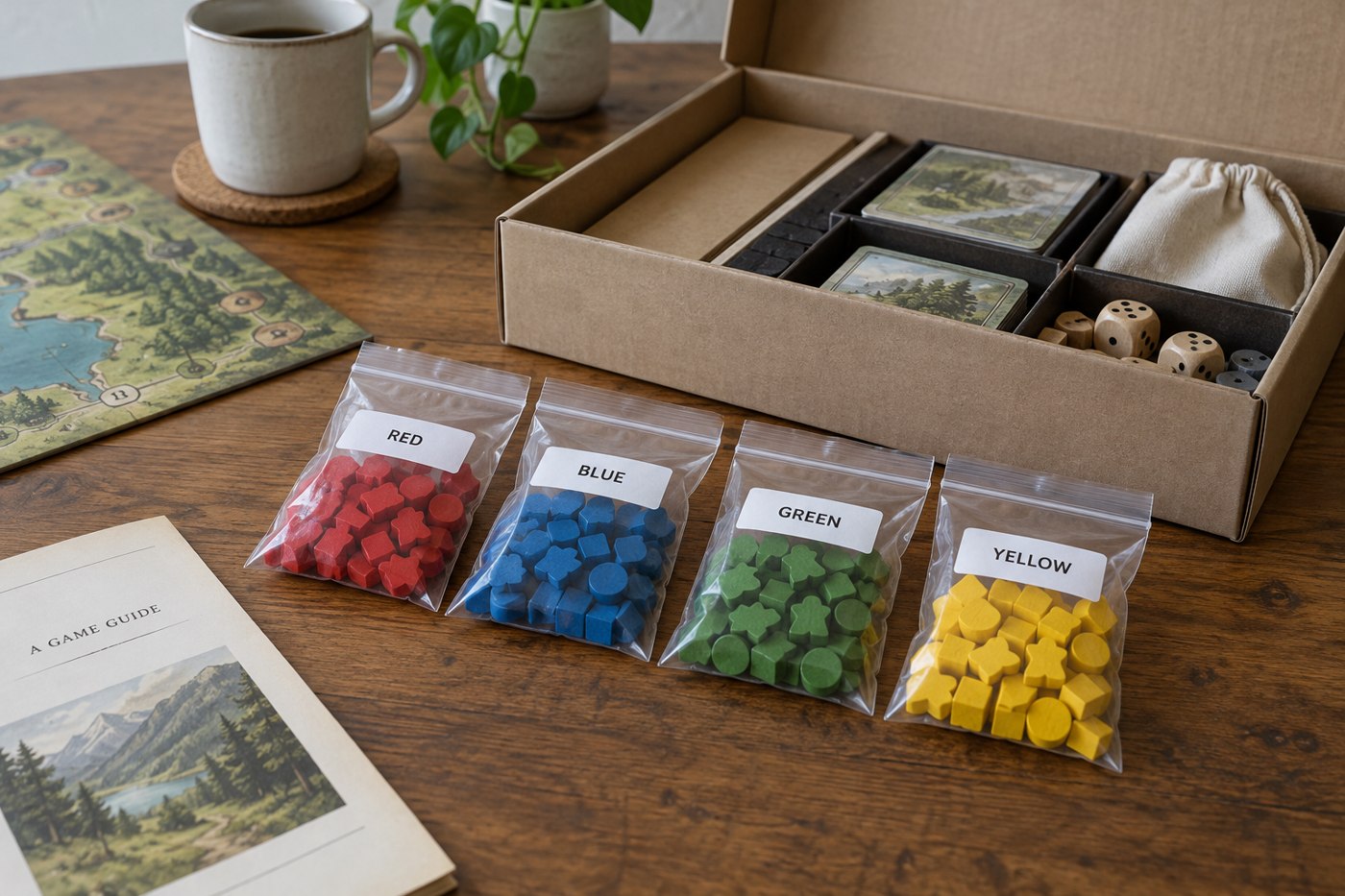
Two tokens that look alike may be needed at different moments, while several different resources may always be taken together. Watch a normal turn and identify the combinations players actually handle. A setup that separates everything into tiny compartments can create unnecessary searching.
Keep counts visible where supply limits matter. Deep narrow wells may conceal whether only one resource remains. Do not divide a rule-relevant limited supply between distant trays unless all players can still understand the total. The organiser should clarify the state rather than hide it.
Try retrieving the smallest piece
Check whether fingers can reach a flat token at the bottom without tipping the tray. Sloped or rounded corners may help, but the actual combination of tray depth and piece size matters. Test from a seated position, not only while standing above the table.
Make sure the tray stays stable when a piece is taken. A very light container on a smooth surface may slide, while a tall narrow one can tip. Avoid a location where players repeatedly reach over drinks or private cards to use it.
Decide whether it must travel inside the box
A play tray and a storage tray can be different objects. If the tray will remain filled between sessions, check its lid and whether small pieces can migrate between compartments when tilted. A cover that rests loosely on top is not necessarily a transport closure.
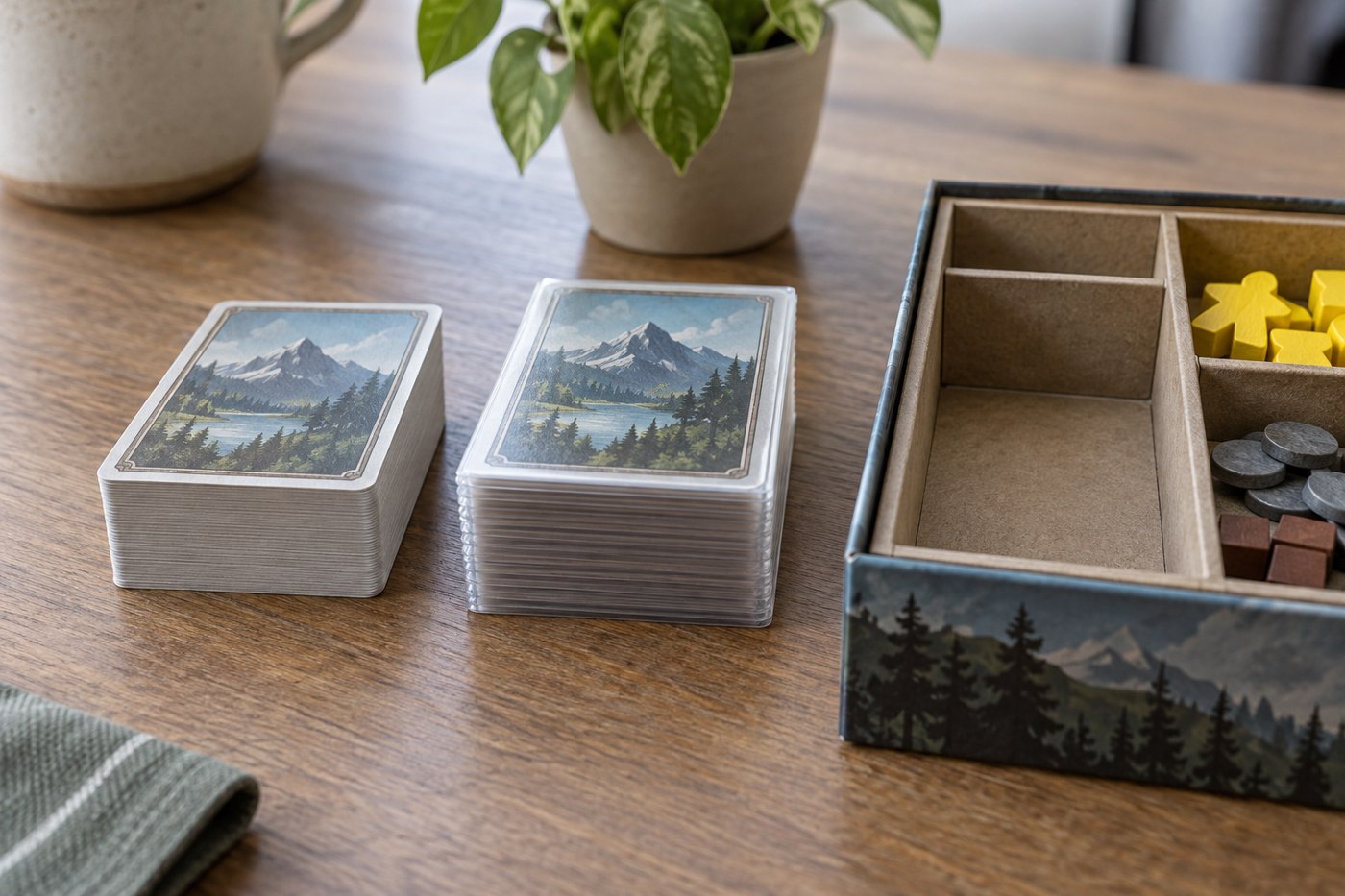
Place the loaded tray in the game box alongside every other component. Check the lid height and the ease of removal. An organiser that fits only when the rulebook is bent or a board is squeezed into a gap has not solved the storage problem.
Keep the system easy to reset
Use a simple label or photograph if several compartments look similar. Labels should identify contents, not require players to memorise an arbitrary numbering scheme. If the same tray serves several games, keep game-specific contents clearly separated when packing away.
After a session, note which compartments were constantly mixed or ignored. A smaller number of useful groups may work better than the original elaborate arrangement. The best tray is the one the whole table can use naturally, including the person helping put the game away for the first time.