Treat thickness as one part of the package
A stated sleeve thickness describes the product using the manufacturer’s convention. It is not a direct promise of the final height of a stack containing cards, seams and trapped air. Two sleeve designs with similar quoted figures may not produce identical storage results. Check a physical sample where possible.
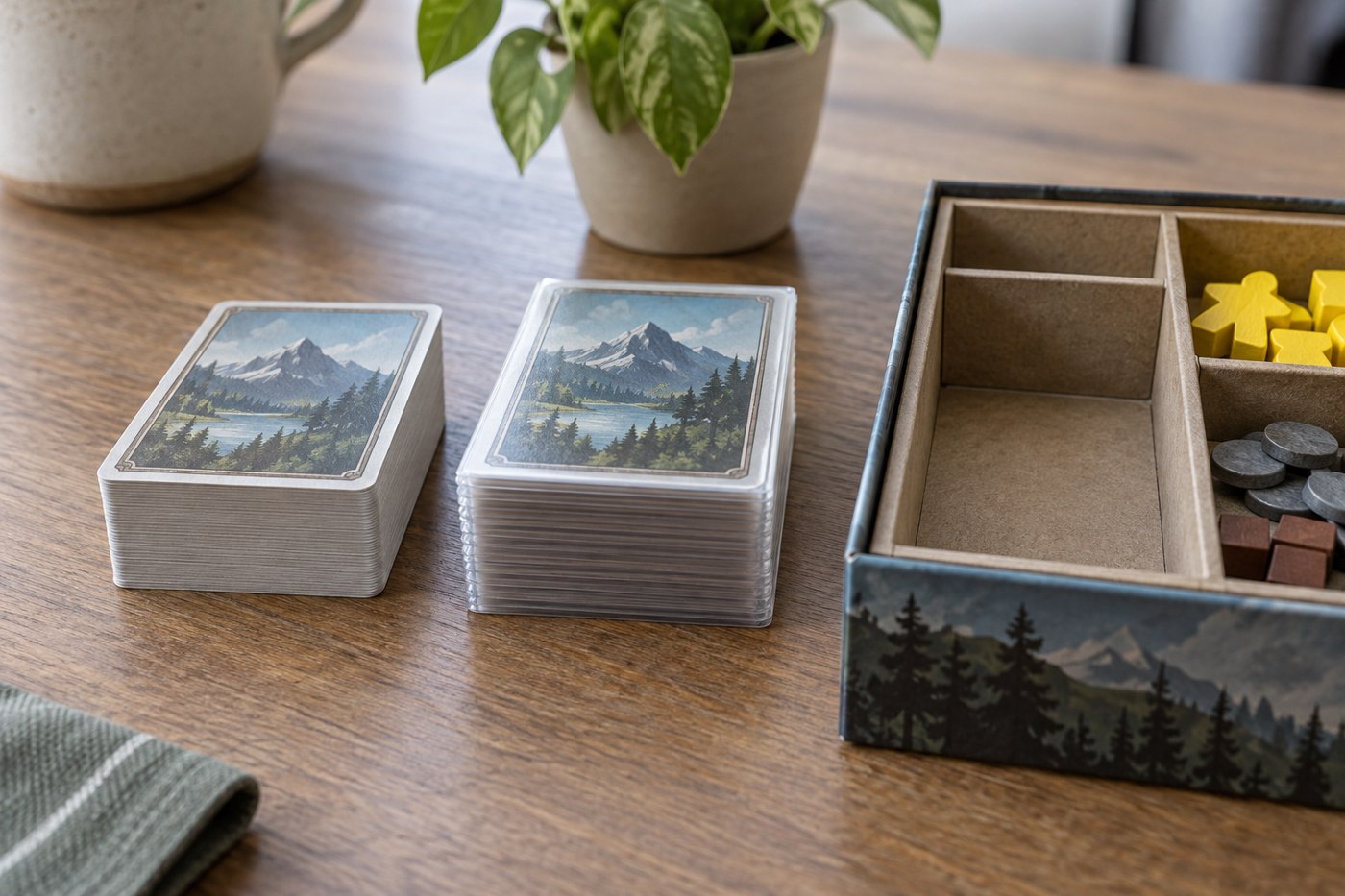
Outer dimensions matter too. A sleeve can fit a card correctly while being too wide or tall for a narrow insert well. The well must accommodate the finished sleeved card, not merely the printed card dimensions. Leave room to remove the deck without scraping sleeve corners against a tight edge.
Test a representative stack
Sleeve a manageable sample and settle it gently on a flat surface. Do not force air out by bending the cards or placing a heavy object on them. Compare the stack with the unsleeved cards and try it in the intended storage compartment. Pay attention to how easily you can grip the deck for removal.
If you are estimating the full deck from a sample, treat the result as provisional. For example, a stack of twenty cards can give you a useful comparison between two sleeve types, but multiplying its measured height does not account perfectly for every packing detail. Test the complete deck before discarding alternative storage options.
Check the insert with the lid in place
Put the other components back as well. A sleeved deck may fit its own recess but raise a tray above it, leaving the lid slightly lifted. Check the whole sequence of trays, boards and rulebooks rather than declaring success when the cards alone fit.
Never force the lid down to compress an overfilled arrangement. Find which layer has changed and decide whether a different sleeve, removable tray or separate organised compartment suits the game. If considering a new insert, confirm compatibility with your edition, sleeve dimensions and expansions rather than relying on the game title alone.
Consider play as well as storage
A thicker or smoother deck may feel different when shuffled, drawn from or stacked. Try the actions the game uses: dealing, fanning a hand, maintaining a draw pile or placing cards in a holder. Check whether the deck slides on your actual table surface.
Decide which cards need the same treatment. If card backs carry hidden information, avoid differences that identify particular cards. A mixture of sleeve types or visibly different wear can reveal something before a card is drawn. Storage convenience should not quietly change the game’s information.