Choose groups that stay together
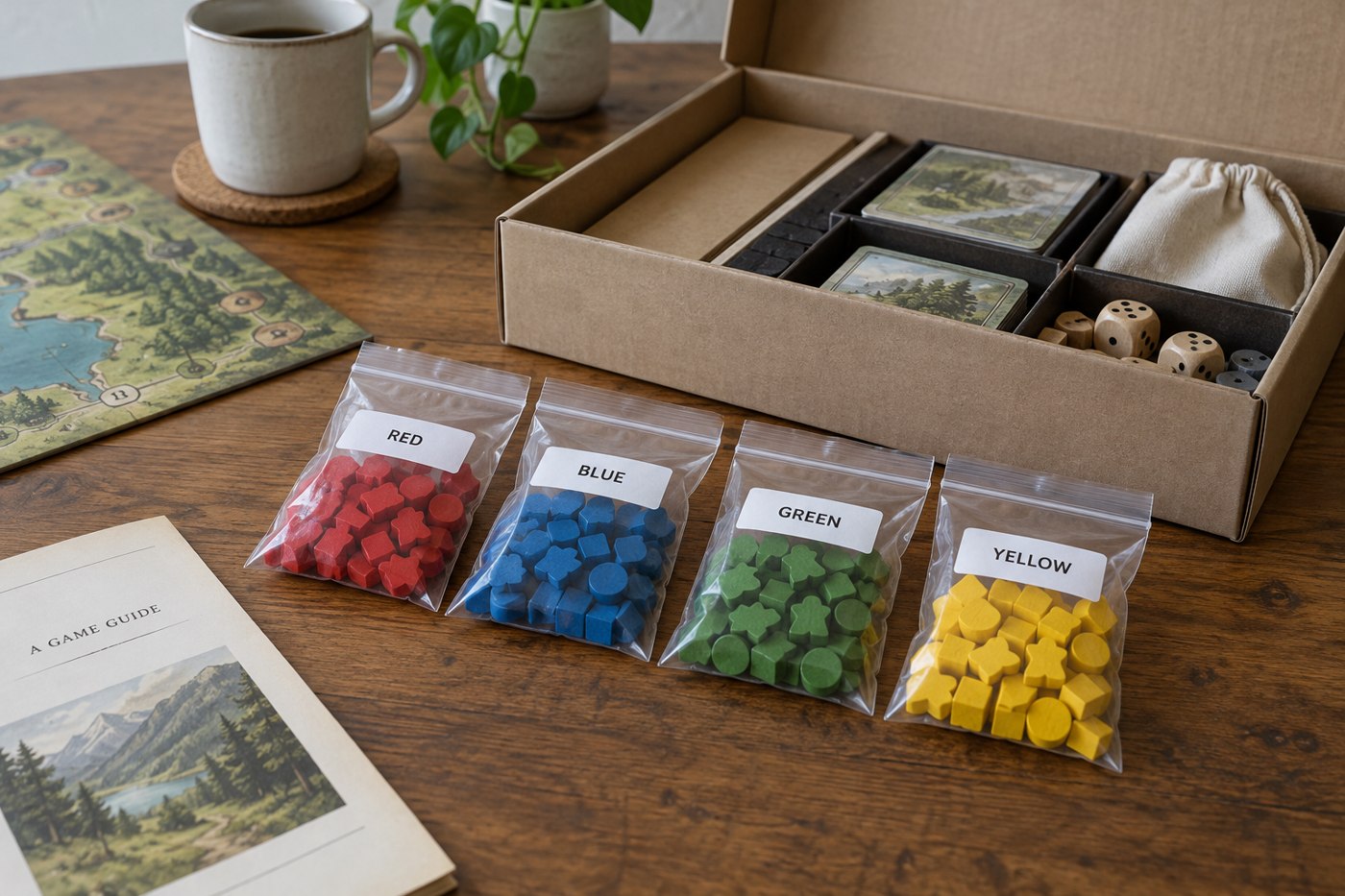
Keep a complete player set together if those pieces are handed out as a unit. Shared resources may belong in another bag, while scenario-specific pieces need their own clear grouping. Do not combine unrelated leftovers merely because they fit in the same pouch.
Check the component list before inventing names. Using the rulebook’s term helps someone connect the bag to a setup instruction. If the game uses a symbol instead of a word, include that identifier in a simple readable form where you can do so accurately.
Make the label useful outside the box
Add the game name when bags might be placed on a shared shelf or carried separately. Include an expansion name where its pieces need to stay distinct. A label such as “extra tiles” becomes ambiguous as soon as another expansion arrives.
Use an attachment that suits the bag and does not expose components to adhesive. A small card inside a transparent bag can work if it cannot damage the contents or obscure something important. Keep ink and sticky surfaces away from cards and delicate printed pieces.
Test the next setup
Close the game, put it aside and later set it up using the labels and rulebook. Notice where you still have to open several bags to find one thing. Rewrite those labels around the missing information rather than adding more decorative detail.
Update labels when the arrangement changes. An old quantity written on a bag can make a complete set appear to have missing pieces. If quantities vary by scenario, name the group without implying that every setup uses the whole bag.