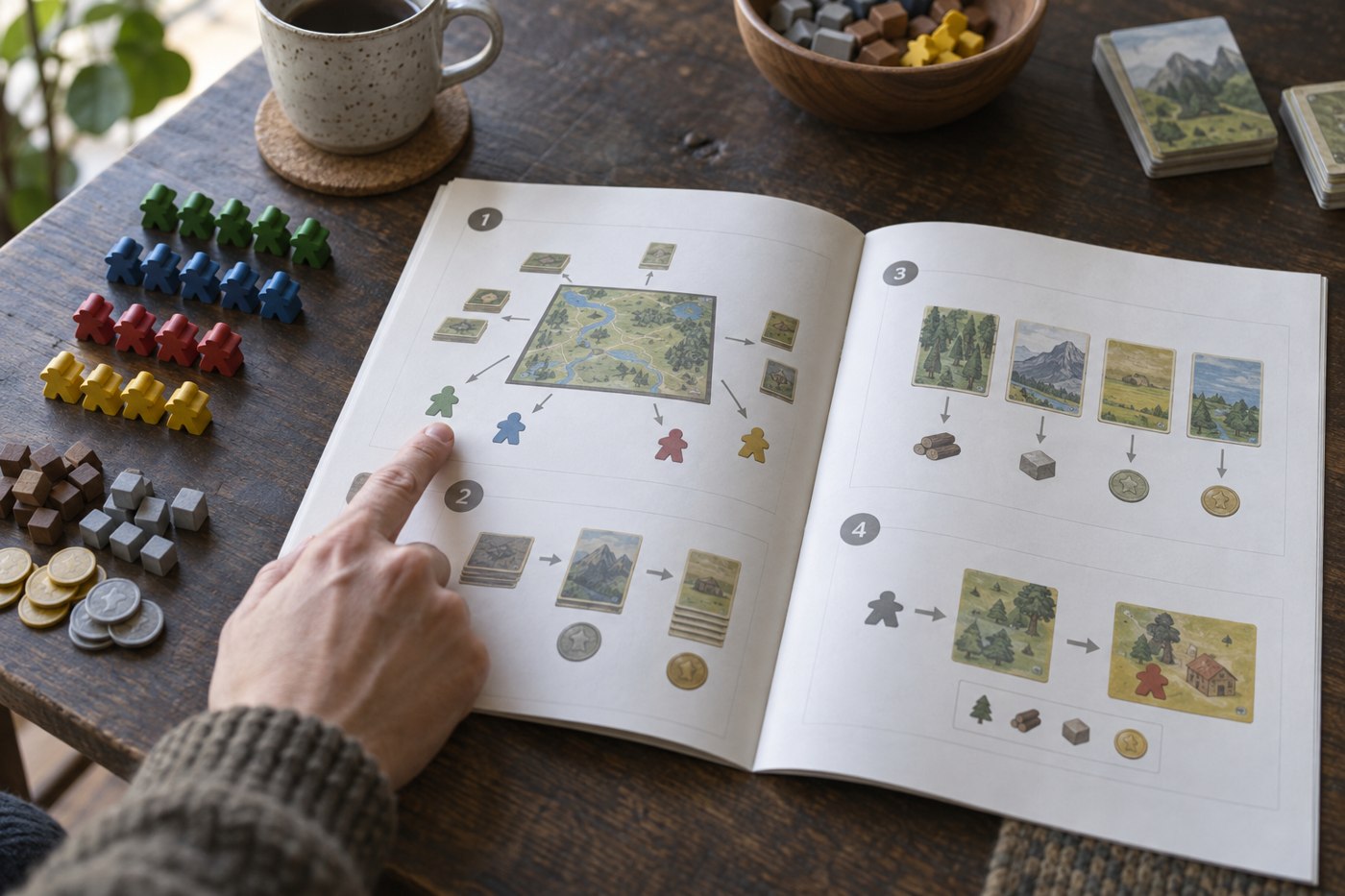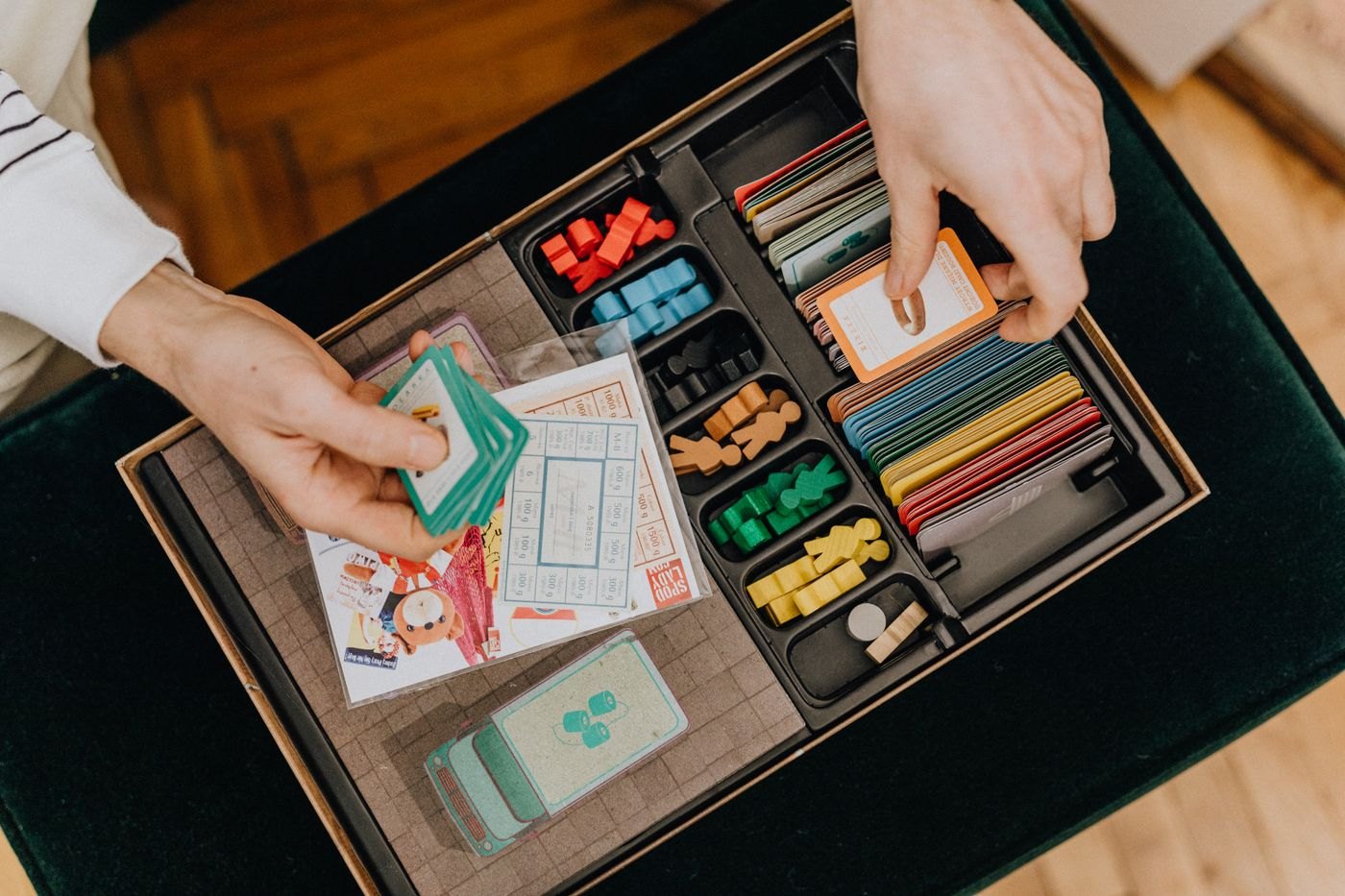
Read the scoring order before moving anything
Confirm which effects happen at the end and which points were already recorded during play. A card showing a point value might be an immediate award, an end bonus or a reminder of a score already taken. Counting every visible number again is a common route to double scoring.
Check whether final conversions happen before objectives are evaluated. Spending resources for points may change what remains available for another condition. Follow the stated order and preserve any required intermediate totals. If the rulebook provides a score sheet, use its categories rather than inventing a new order from memory.
Record categories separately
Write a row for each scoring category and a column for each player. Begin with any score already on the track, then add final awards as separate entries. A written subtotal lets you correct one category without reconstructing the whole result. Use paper or a simple calculator without allowing it to hide the individual inputs.
Count one category across all players before moving to the next when the rules allow it. Everyone is then checking the same definition at the same time. For private objectives, let the owner reveal and explain the condition at the prescribed point. Do not expose hidden material early simply to speed up the arithmetic.
Check thresholds and complete sets
Read wording such as each complete pair or at least three carefully. A partial set may score nothing, while a threshold may award a fixed amount rather than points for every item. Use the physical pieces to form the required groups if doing so does not destroy another scoring relationship.
Keep multipliers separate from base values. For an invented example, three eligible items worth two points each produce six points; a separate bonus of two adds two unless the rule says it multiplies the total. State the calculation aloud when an effect is complicated. This gives other players a chance to catch a misread symbol without challenging the entire result.
Reconcile tracks and notes
A score track can wrap around or require a marker for passing its maximum. Check any lap marker before writing the starting total. If a piece was knocked, use the most recent confirmed score and visible scoring events rather than selecting the position that seems likely. Admit when reconstruction is uncertain.
After entering all categories, add each column and ask players to verify their own entries. Then check the printed tie-breaker if needed. Some games permit tied winners, and some use a sequence of comparisons. Do not choose a tie-breaker based on whichever resource happens to remain on the table.
Keep records useful rather than burdensome
If the group records results, include the game version and any relevant variant. A score from a different player count or difficulty may not be directly comparable. Note a substantial rules error rather than treating the number as a clean benchmark. There is no need to record every move unless the group enjoys that separate activity.
Once everybody accepts the result, begin packing by component type. A final photo can preserve a memorable position if all players are comfortable and it contains no protected campaign information. The score should close the session clearly, leaving room to discuss an interesting decision without reopening every arithmetic step.
When a bonus uses several conditions, check eligibility before calculating value. First identify which cards qualify, then total their points. Mixing those two jobs encourages counting an attractive number before noticing that the card fails a required condition.