Create a clear sorting area
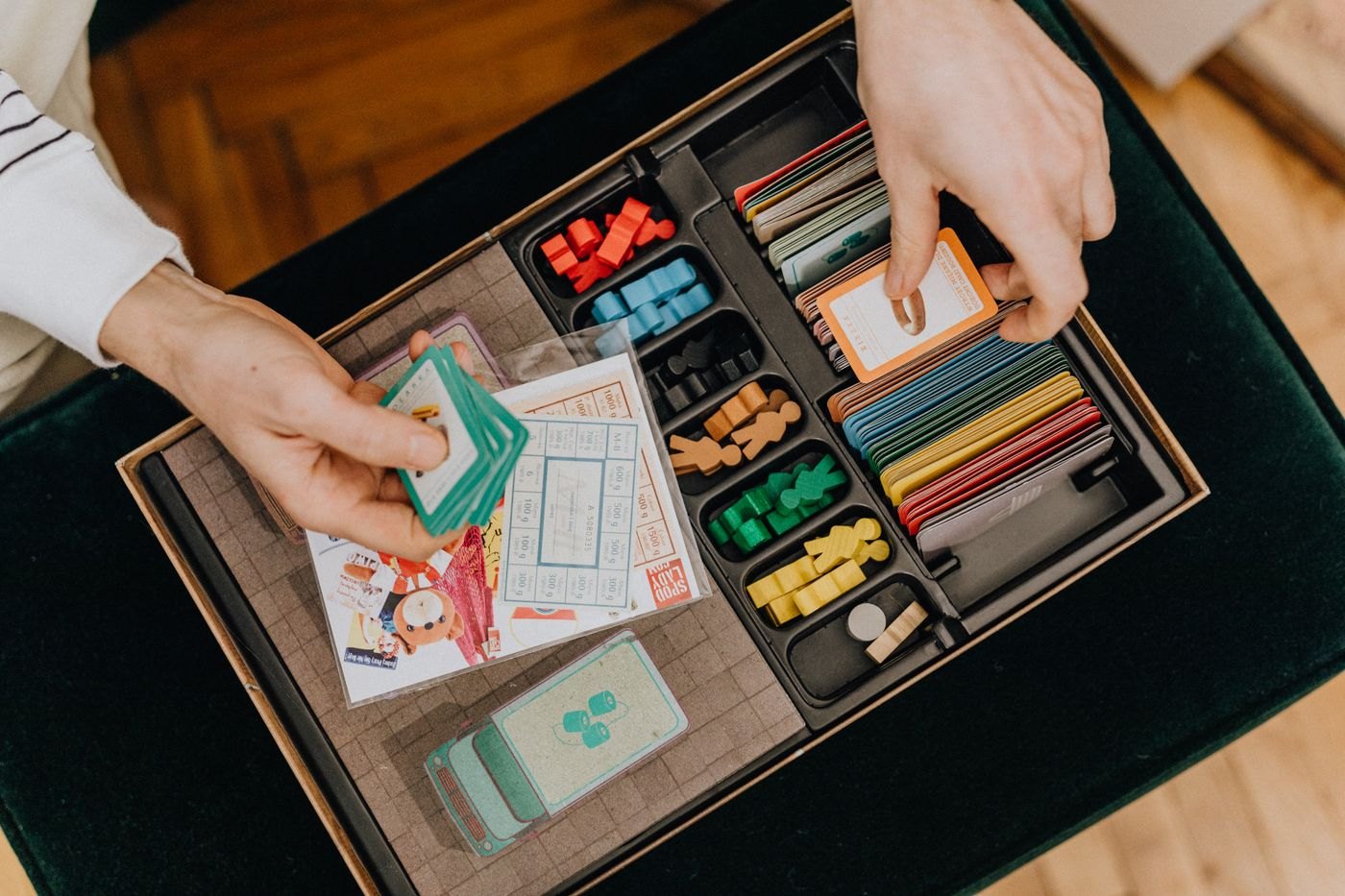
Clear enough space for the board and a temporary pile of unused materials. Check the component list before punching or mixing anything unfamiliar. Count distinct sets such as player pieces and special tokens first. A pool of interchangeable money is less likely to conceal a setup problem than a missing starting card.
Keep each type of card together until you identify its back and symbol. Separate reference cards from playable cards, and look for expansion marks. Some cards with similar artwork have different jobs. Turning every card face up may reveal material the rules say to keep hidden, so inspect identifiers before opening sealed sections.
Follow the actual player count
Choose the board side, starting resources and deck preparation for the number of people playing. Read the full setup step before moving pieces; an instruction may exclude cards after an initial selection. Count out one complete player kit, then repeat it for the other players. This makes discrepancies easier to spot.
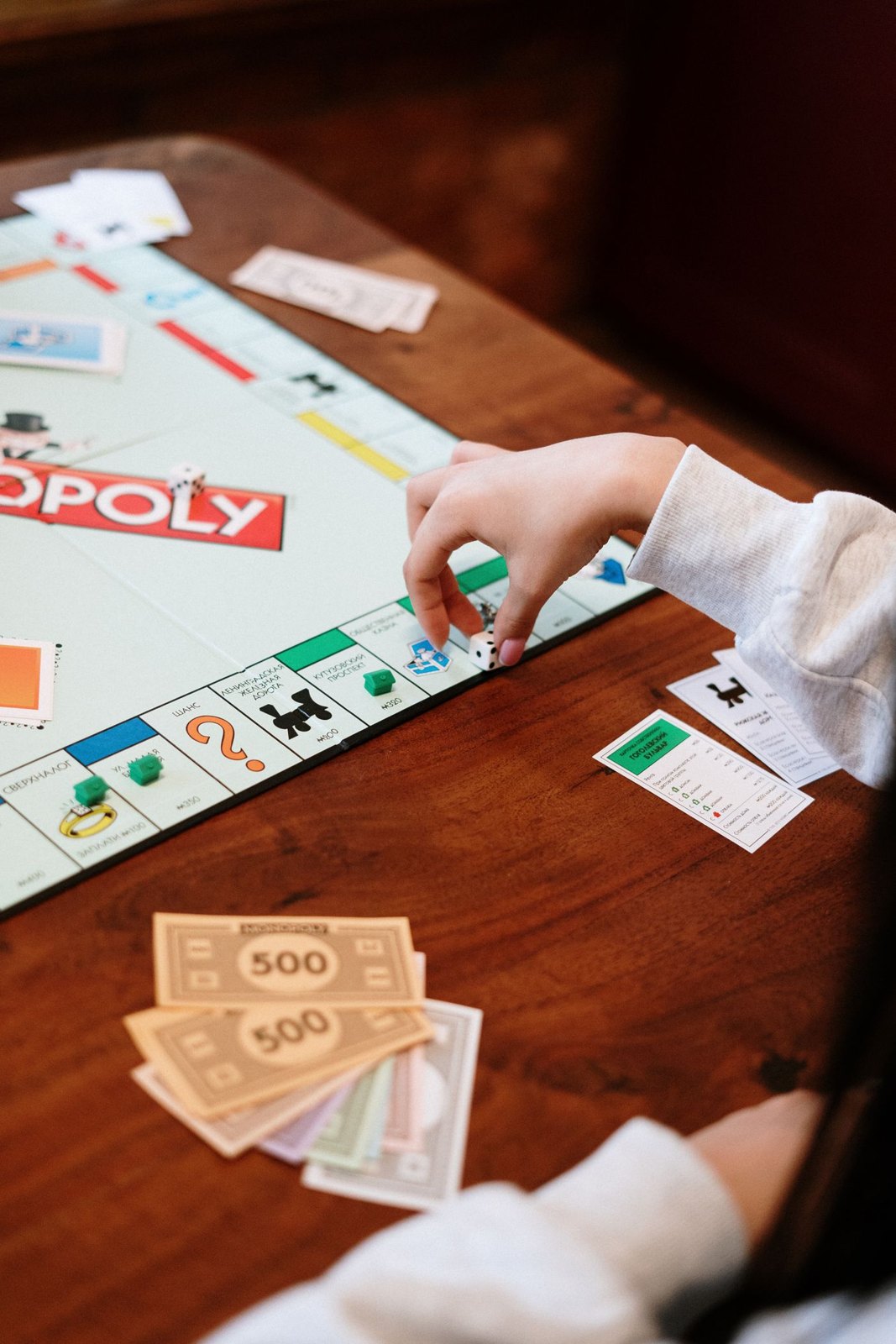
Place shared supplies where everyone can distinguish them from personal holdings. Keep a small gap around each player area. If a token is meant to start on a track, put it there now rather than leaving it beside the board as a reminder. The final visual arrangement should represent the actual starting state.
Do one last comparison
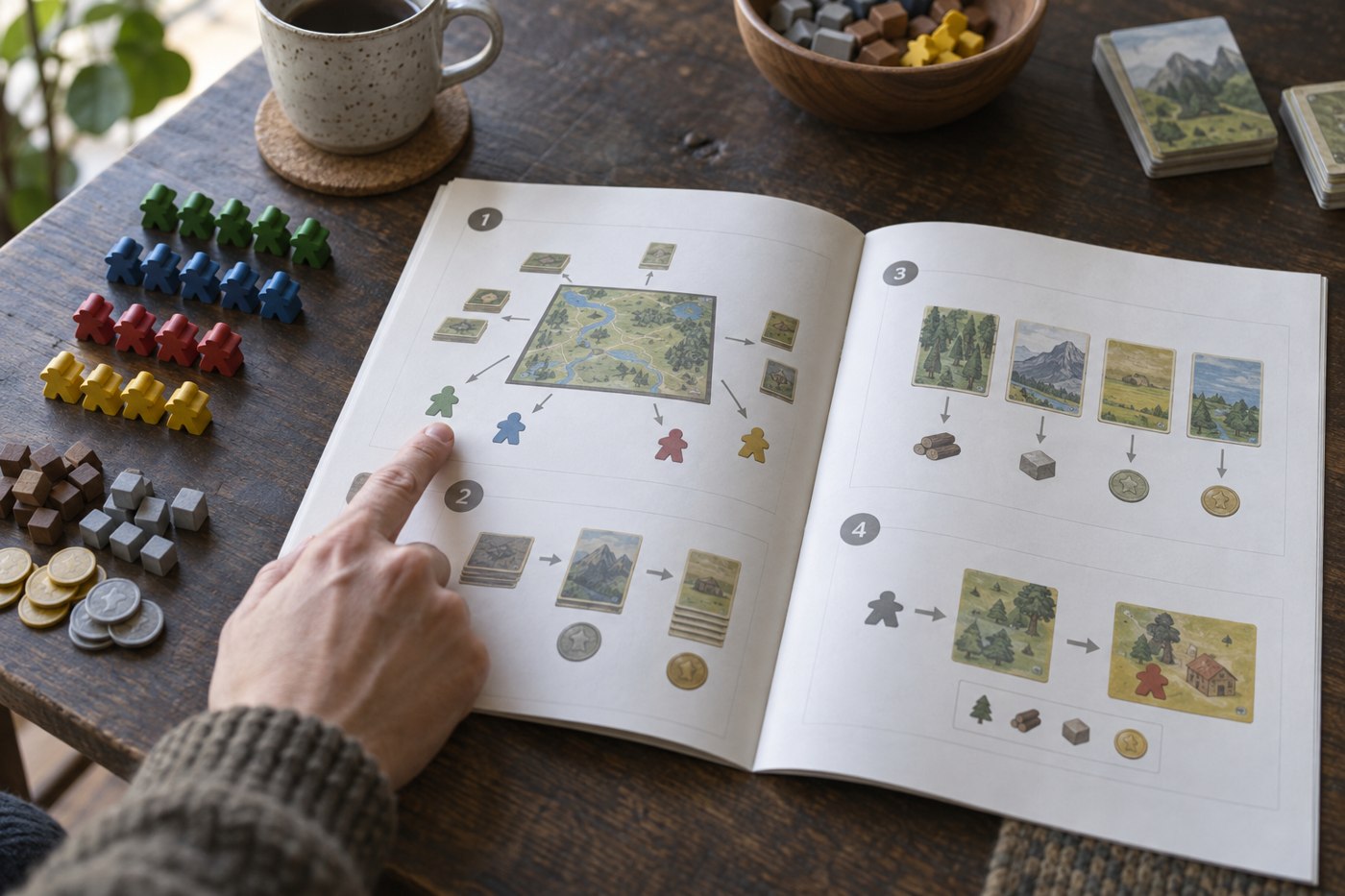
Check the setup illustration after completing the written steps. Compare locations and categories, not arbitrary colours chosen for the picture. Confirm the first-player marker, opening hands and public display. Leave the materials excluded from this session in the box so nobody accidentally draws from them.
If something appears absent, inspect beneath the insert, inside folded boards and among cards stuck together. Record the exact component name and quantity before contacting the seller or publisher. Do not assume that an unused piece is a spare: the later rules may require it. When inventory and setup disagree, check the edition printed on your rulebook.
Keep the packaging separate from the sorting area until the inventory is confirmed. Small transparent bags and folded paper can conceal pieces surprisingly well. A clean boundary between packaging and game materials reduces the chance of throwing away an unidentified component during the first tidy-up.