Begin with the overview and component list
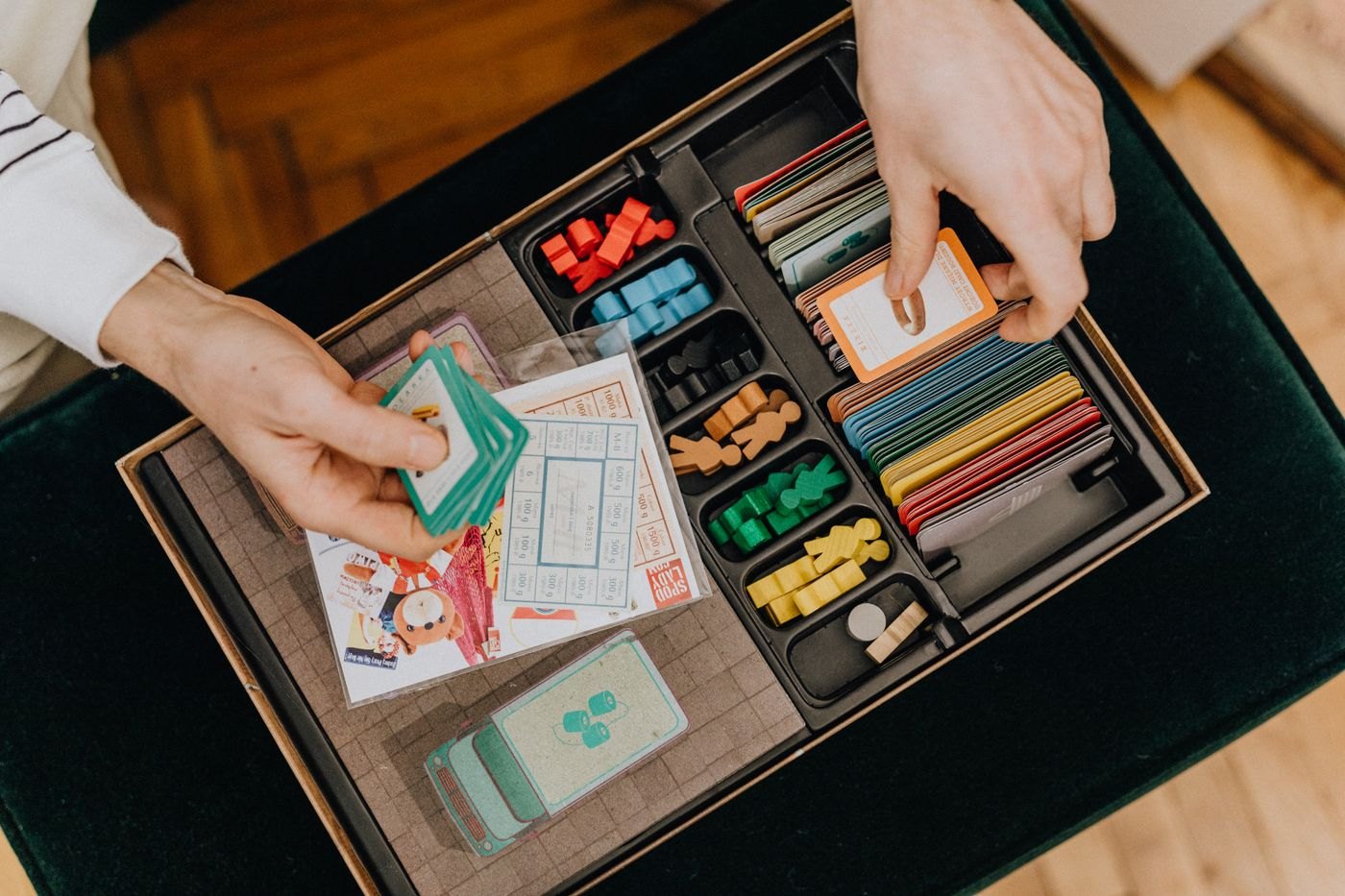
Read the short description of the game and locate its stated objective. Then compare the component pictures with the contents of the box. You do not need to memorise every token name, but you should be able to recognise the difference between a player piece, a shared resource and a scoring marker. Put similar items in temporary groups.
Read any first-game instructions before following the full setup. Some games reserve certain cards, boards or modules for later sessions. Bringing every component into play can make the rules appear inconsistent when you have simply included an optional system. Keep excluded materials in a separate area until the first setup is complete.
Build the opening position
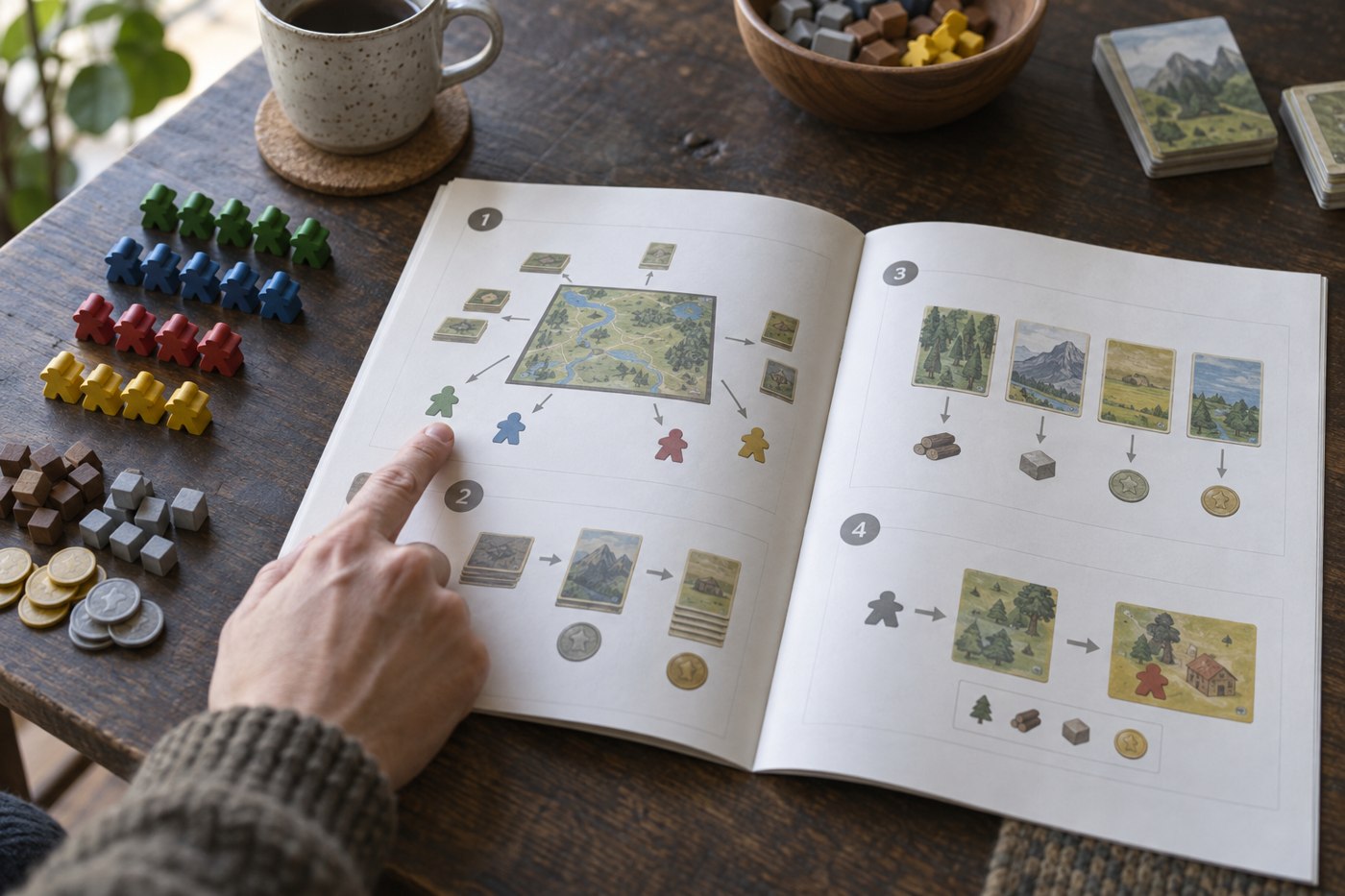
Follow setup in its printed order. A later instruction may depend on a deck already being sorted or on a board facing a particular way. Lay out one or two player areas, even if you are learning alone, so you can see which supplies are individual and which belong to everyone. Use the intended player count when checking quantities.
Do not shuffle unidentified decks as a general tidying step. Some decks have numbered order, distinct backs or preparation rules. If a passage tells you to draw from a deck you cannot identify, resolve that immediately. Continuing with the wrong deck produces questions that no amount of reading the turn sequence will answer.
Walk through the normal sequence
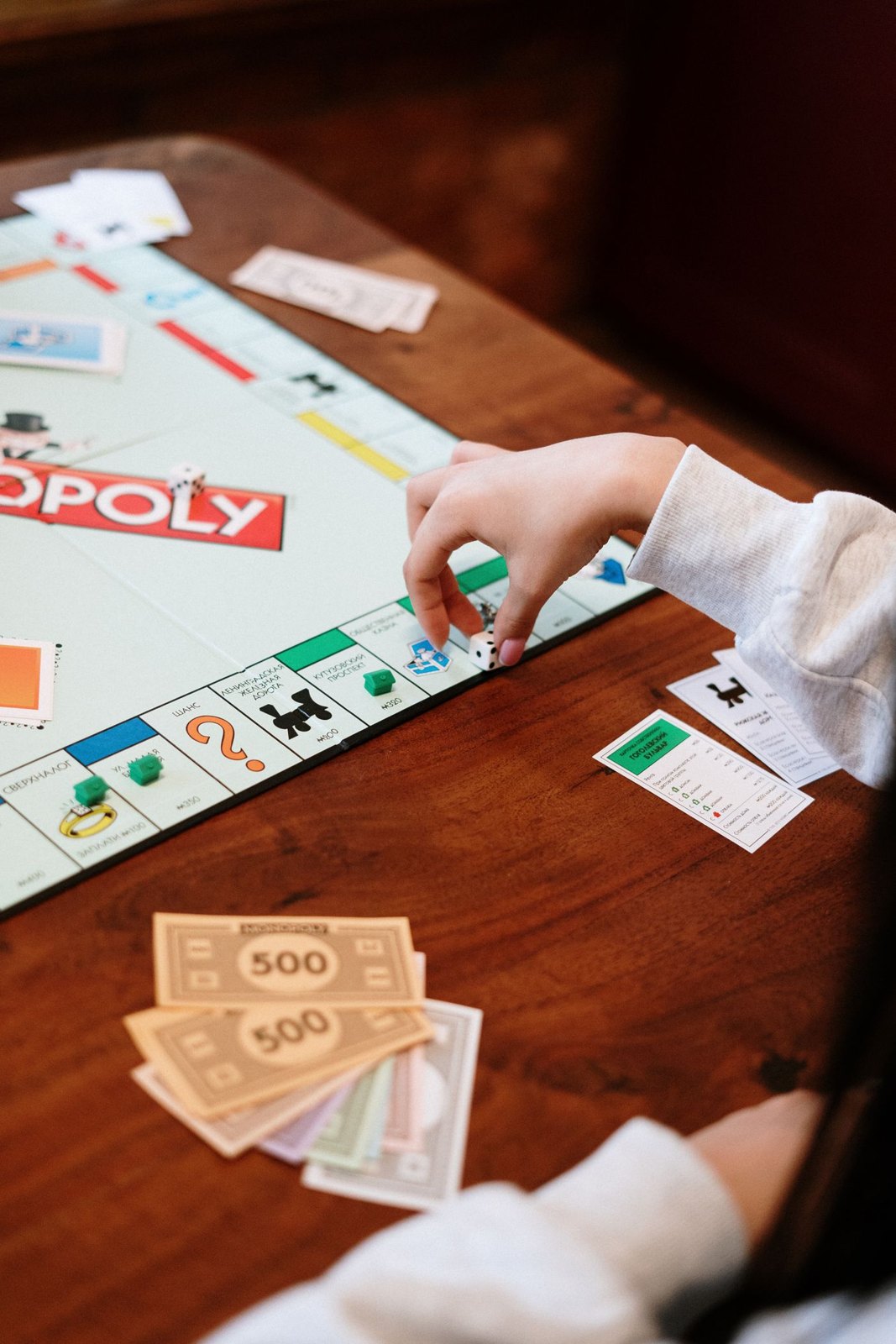
Read the turn overview once, then perform an uncomplicated legal action with the pieces. Pay costs into the correct destination and take rewards from the correct source. Follow the turn all the way through its cleanup. This exposes small but consequential distinctions, such as whether a played card is discarded now or remains in front of you.
Use a scrap of paper for unresolved questions rather than interrupting every sentence with a search. Label each question with the page and relevant term. Continue only when the uncertainty does not affect the current example. A question about a rare final bonus can wait; a question about how many actions a player receives cannot.
Connect scoring to decisions
Read final scoring before attempting a complete game. Work through a small invented example using the printed scoring rules. Separate points earned during play from points counted only at the end. Check whether a track records the whole score or just one part of it, and whether a resource is spent when scored.
Return to the basic actions and ask what each one accomplishes. An action may score immediately, improve future turns, deny an option to somebody else, or satisfy an end objective. You do not need to know which is strongest. You need to understand why the action exists and what it changes.
Use the book as a reference on the second pass
Now look up the questions you recorded. Search the glossary, timing notes and examples for the exact printed term. If an official correction exists for your edition, keep it with the rulebook. A video can clarify movement or setup, but verify a disputed detail against the current publisher material rather than relying on a remembered demonstration.
Finish by resetting the game without following every sentence again. When you can reconstruct the opening and take a legal ordinary turn, you are ready for a learning session. Keep the rulebook open nearby; needing to consult it is part of learning, not evidence that the preparation failed.