State the smallest answerable question
Replace a broad claim such as this card is overpowered with a timing question: does its reward happen before or after the market refills? Name the card, action and phase using the printed terms. Read any relevant text aloud, including qualifications that initially seem unimportant. A single word such as may or another can settle the issue.
Leave the position unchanged while checking. Put a marker beside the active player if the interruption may make the turn order unclear. Ask people not to draw, shuffle or reveal anything yet. Preserving the state keeps both possible interpretations available until the table knows which one applies.
Search the game's own materials first
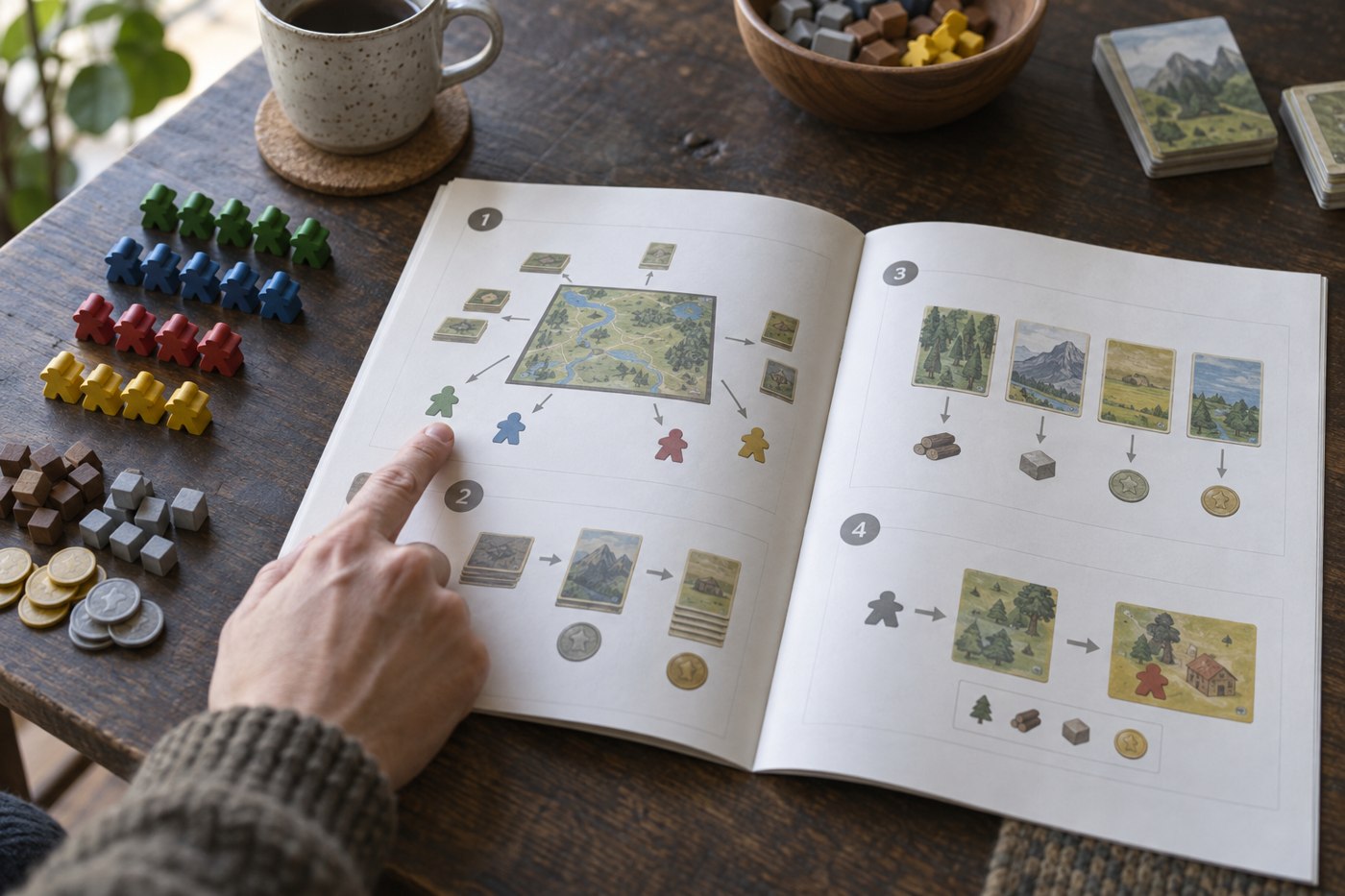
Check the main rule, then nearby examples, the glossary and any card-specific appendix. The quick-start sheet may omit an exception that the full rulebook explains. Make sure the materials belong to the same edition and expansion combination. Similar artwork or a familiar title is not enough to establish that two rules documents describe the same system.
If the publisher provides a current FAQ or correction, use it for the disputed point. Distinguish a formal rule correction from a forum participant's suggested house rule. A popular answer can still be unsupported. Save a useful official link after the session so the same question does not require another search next month.
Set a sensible lookup limit
Agree on a short window for an ordinary casual game, especially if only a small effect is at stake. One person can look up the exact term while another checks the book. Six people searching different remembered phrases often adds more contradictory information than it resolves. The rest of the table can stay at the paused position.
A question that determines whether an action is legal deserves more attention than a detail that cannot affect the current turn. Do not rush a player into spending resources on an action that may be invalid. If necessary, let them choose another legal action without penalty while the uncertain interaction is left for later.
Make a temporary ruling explicit
When a reliable answer cannot be found, agree on one interpretation for the remainder of the session or until a clearly stated boundary. Apply it equally to every player. Write it down if it is likely to recur. This is a table ruling, not proof of the official rule, and future players should not inherit it without that distinction.
Consider incentives when choosing who decides. A player who gains immediately from one interpretation should not quietly have the final word. The group can choose the reading that best follows the printed sequence, or use an agreed neutral method if the alternatives remain equally plausible. The goal is a consistent playable session, not a debate victory.
Resolve the uncertainty after play
Keep a concise description of the position and the exact text that caused confusion. If asking the publisher or a rules community, include the edition and relevant expansion. Avoid posting hidden scenario information in an unmarked public question. A narrowly framed example is easier for someone else to answer than a transcript of the whole argument.
When the answer arrives, update reference notes and tell the group what changes next time. If it differs from the temporary ruling, there is no need to replay every previous decision verbally. Mark a recorded result if comparability matters, then use the confirmed rule in future sessions. The lookup process should reduce repeated interruptions rather than create an ongoing dispute.
If the question is about a component symbol, place the relevant reference beside it. Similar icons can differ by a small arrow, border or number. Reading from memory while the physical card sits across the table can turn a simple visual distinction into a much larger disagreement.