Check which version is in the box
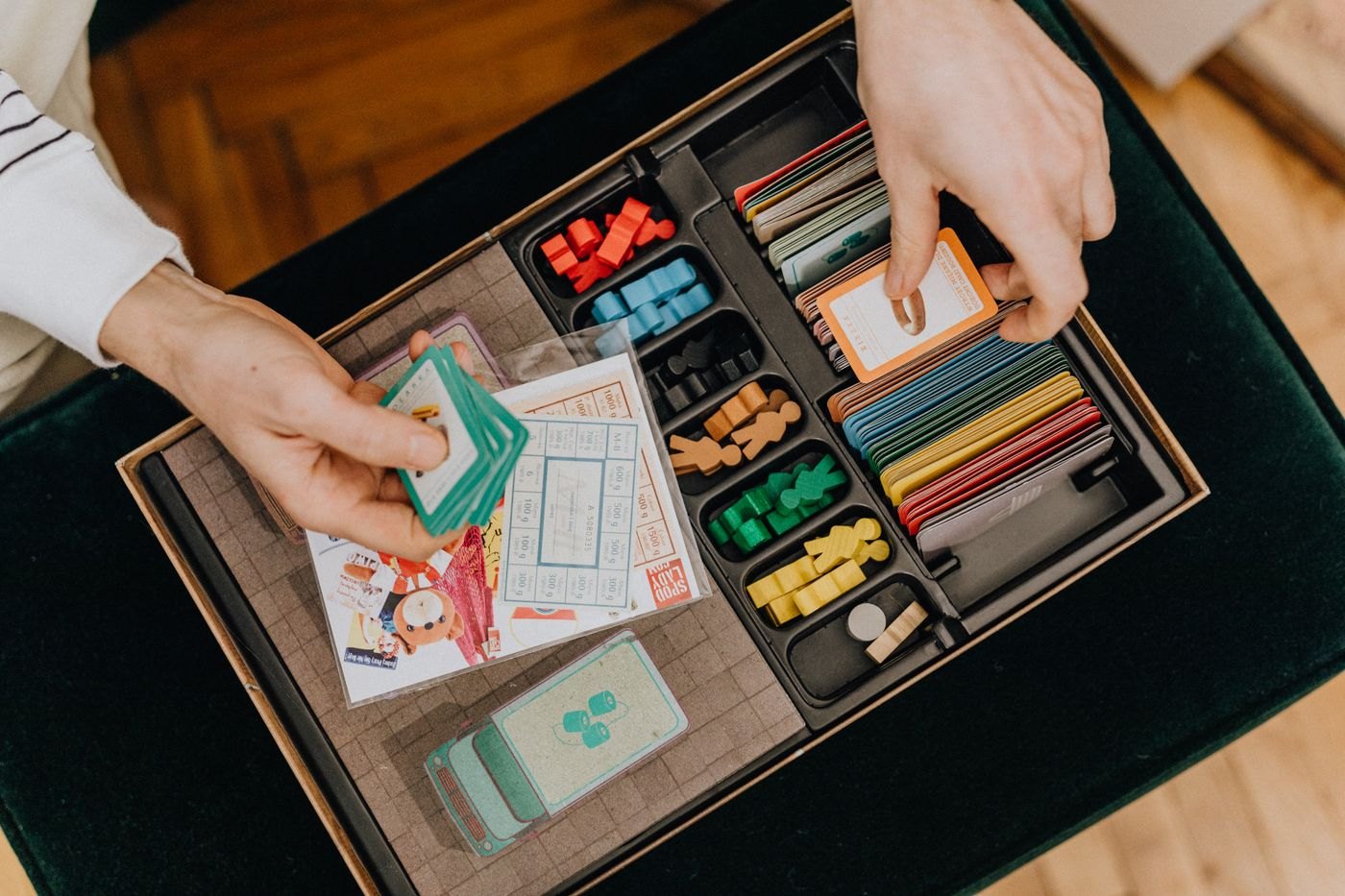
Look for expansions, alternate boards or a saved scenario that were added after your last session. Separate the materials needed for the planned mode. If the box contains homemade reference cards, confirm that they match the current rules and modules. An old aid can preserve a house rule long after everyone forgets agreeing to it.
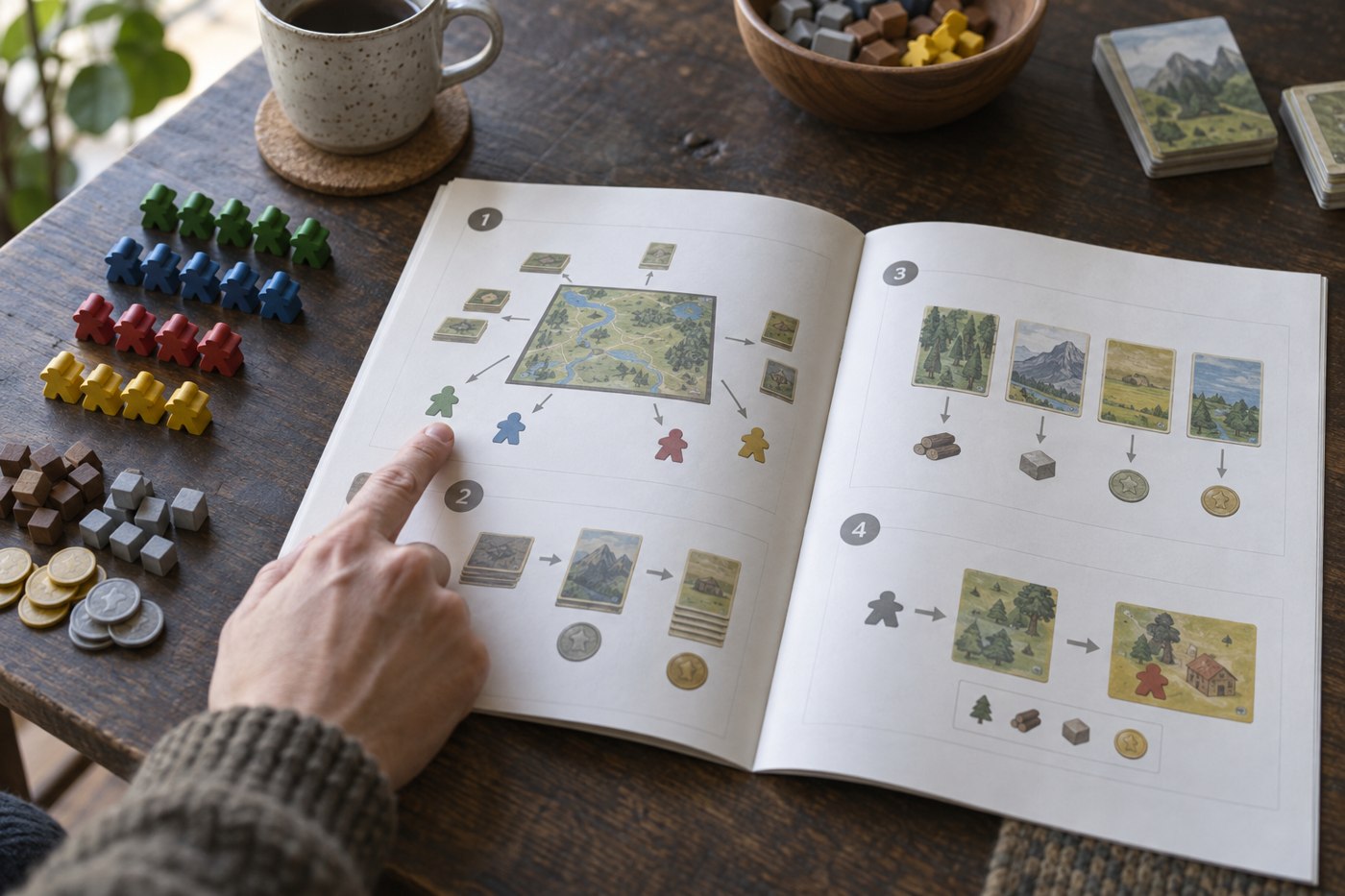
Check the intended player count before copying a remembered setup. Starting resources and available spaces may differ from the last time you played. Read setup from the book once even if most of it feels obvious. Familiarity is useful for recognising components, but it is not a substitute for the quantities.
Refresh the sequence and the finish
Read the turn summary, round transition and end condition. These give the game its timing. Then review scoring so you know what actions are building toward. Pay attention to whether a bonus is awarded during play or only at the end; that distinction is especially easy to remember vaguely.
Move through one ordinary turn with the pieces. Include costs, rewards and cleanup rather than stopping after the main action. If an uncertainty appears, resolve it immediately while the position is simple. A five-minute rehearsal can save a much longer correction after several players have acted.
Separate memory from confirmation
When teaching returning players, say which details you have checked and which you are still looking up. Invite them to question a remembered rule without turning it into a contest over who played more recently. Two confident recollections can both be wrong if each comes from a different edition.
Look at any notes from the previous session for known mistakes, but verify the rule rather than trusting the note blindly. A sentence such as check the bonus timing identifies a problem; it does not supply the answer. Replace vague notes with a page reference once the issue is resolved.
Give the table a brief common restart
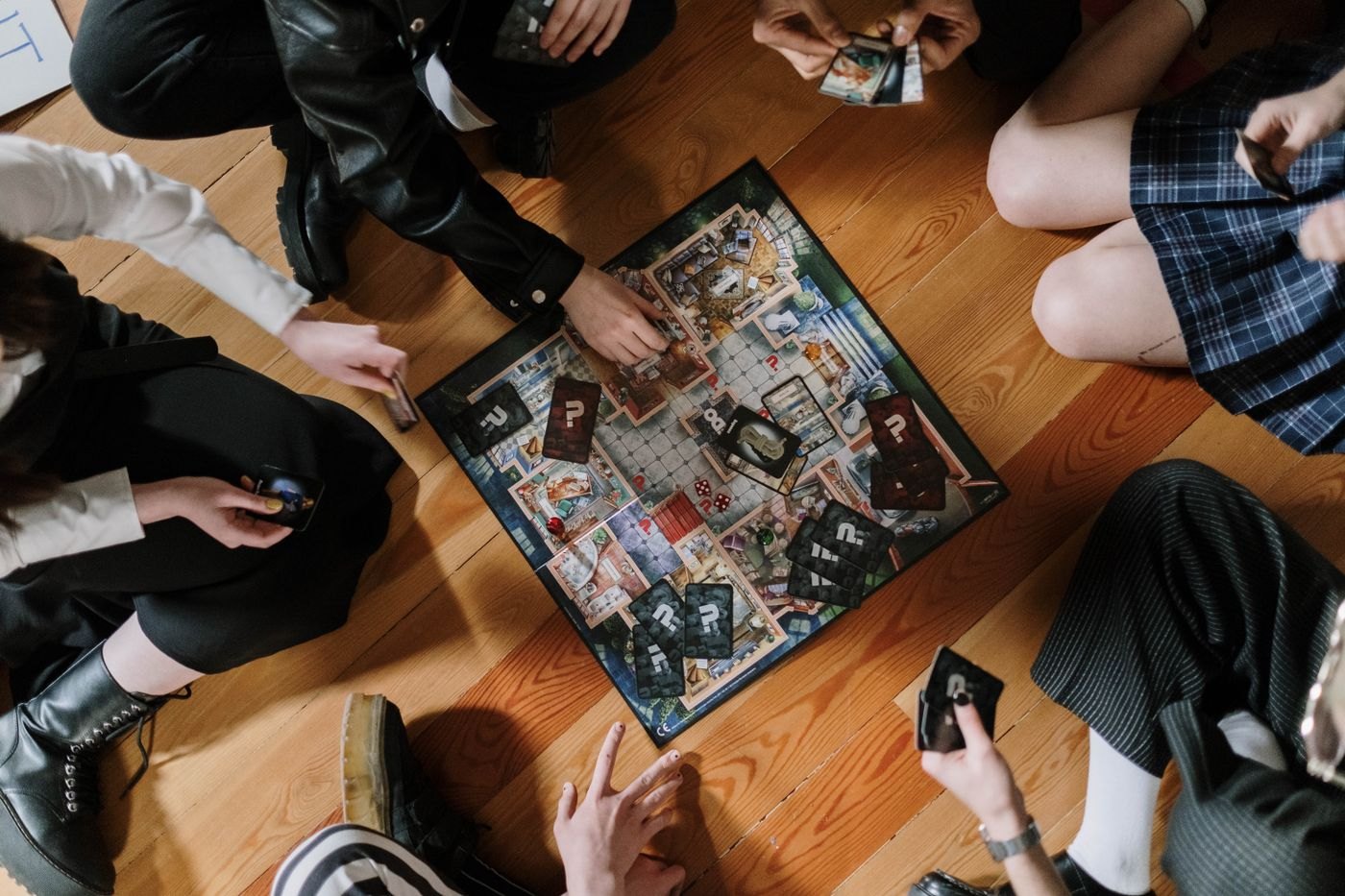
Explain the goal, turn sequence and one or two easily missed rules before the first move. Do not repeat the entire rulebook if everyone remembers the basics. Ask for a concrete first action and fill gaps as they arise. New players at the same table still need a full enough explanation to participate fairly.
After the session, pack the game in a way that supports its next return. Put the rulebook and accurate reference material on top, and label expansion components that stay mixed in the box. A short setup note is more useful than relying on the group to remember the same details again months later.
If several people remember different house rules, list them separately from the published rules before deciding what to use. A returning session is a good moment to make those choices explicit. Do not allow an old informal convention to surprise a newcomer who has read the actual rulebook.