Choose the questions it must answer
Start with the moments that repeatedly interrupt play. Common examples are the order of a turn, the available basic actions, a recurring cost and the timing of a refill. Watch a learning round or make notes during a solo rehearsal. Include information people need to consult, rather than information you happen to find interesting.
Distinguish a reference from a strategy sheet. A reminder that an action costs two coins is useful to everyone. A claim that the action is rarely worthwhile can steer choices and may be wrong in the current position. Keep tactical opinions off the basic aid unless the group specifically wants a separate learning note.
Use the printed terminology
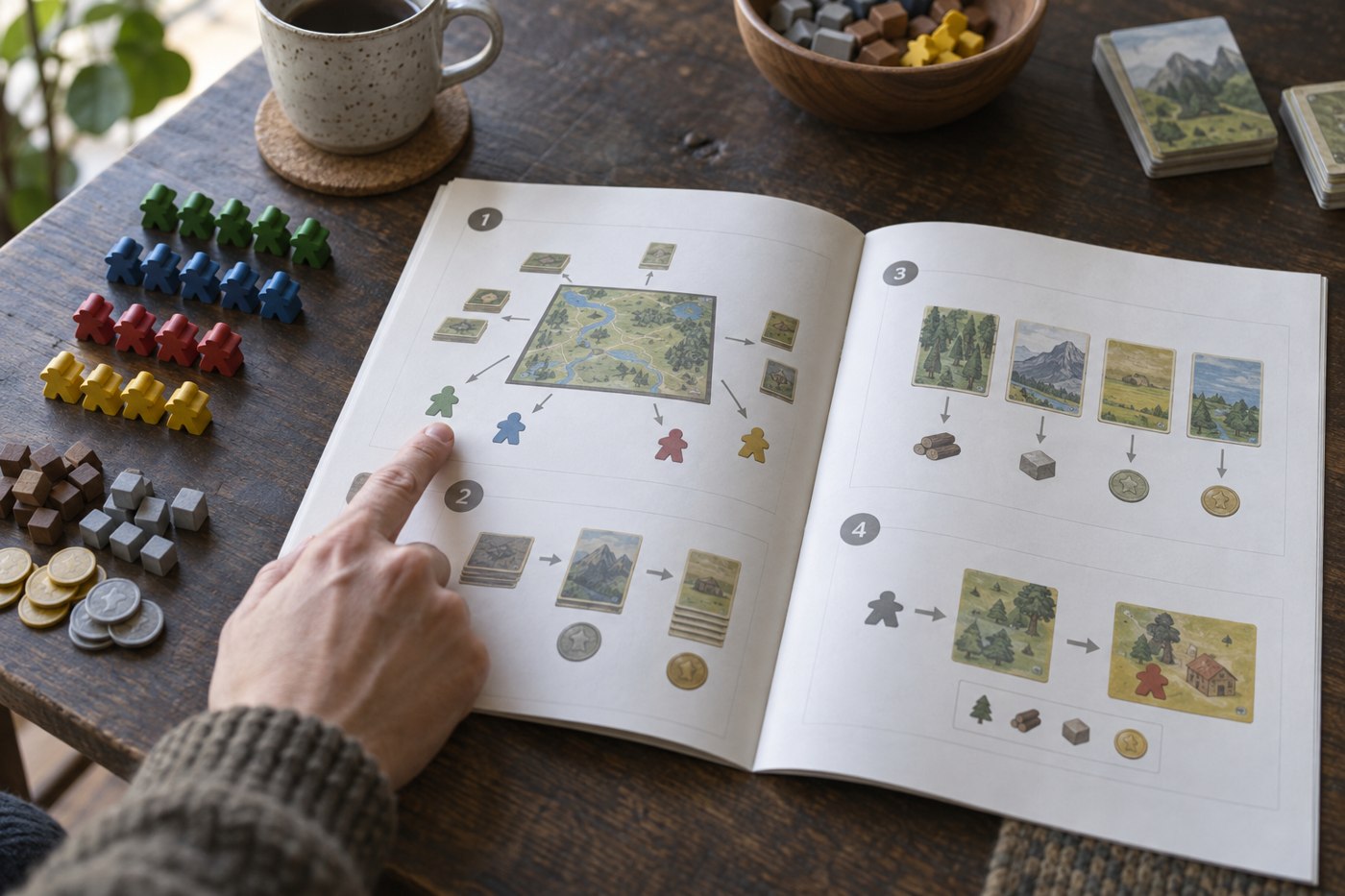
Copy the exact names of phases, resources and actions, then summarise the instruction in your own short wording. Do not rename an action to save a few letters if that makes it harder to find in the rulebook. Put a page reference beside a tricky procedure so the summary can lead back to the full explanation.
Be particularly careful with words such as may, must, up to and immediately. Removing one of these can change a rule. Preserve limits and timing even when they make a line slightly longer. If an effect is too complicated to summarise accurately, use a prompt to consult the rulebook rather than a misleading abbreviation.
Make the sequence visible
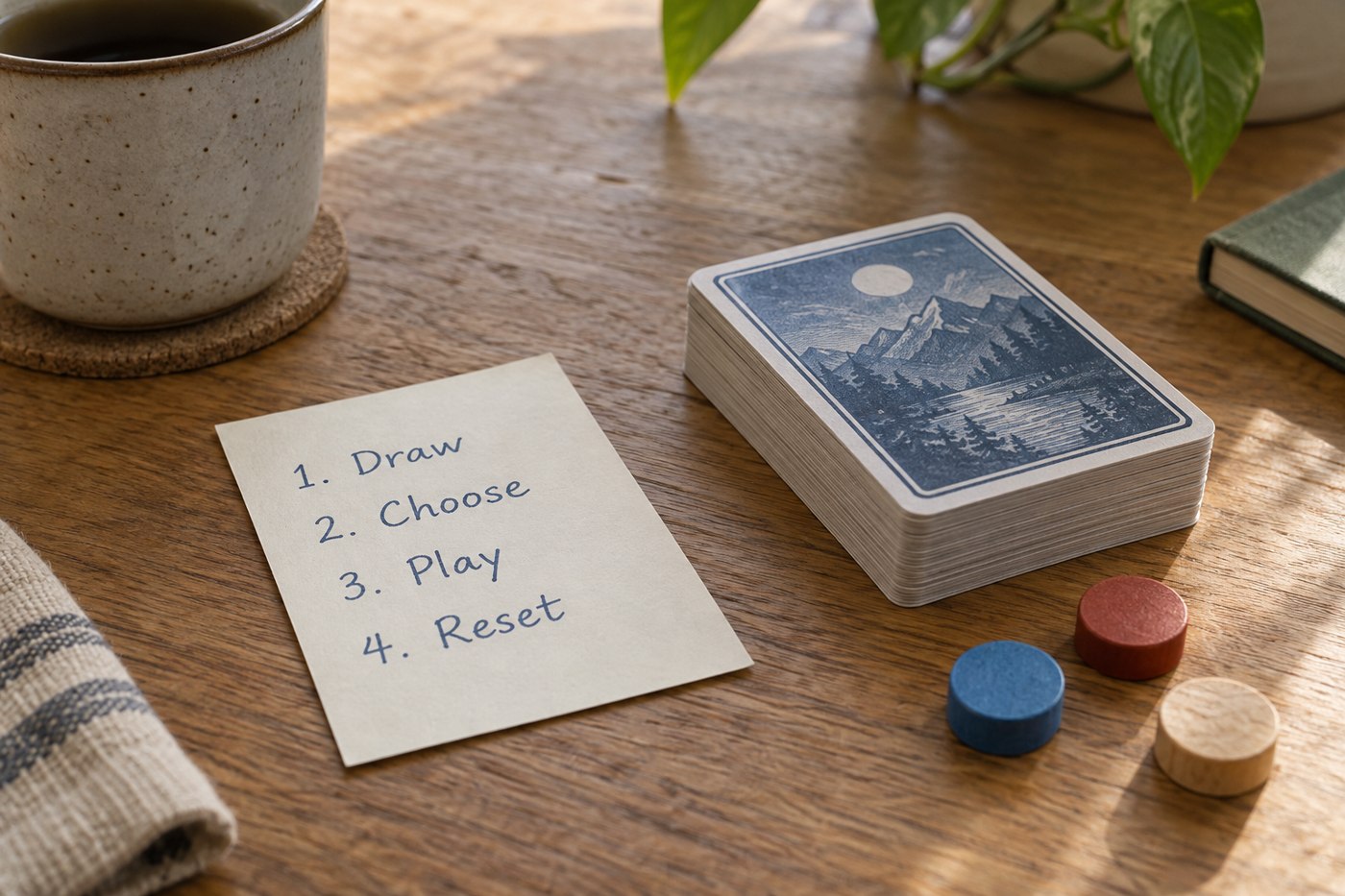
Give each recurring step its own line and leave enough white space to distinguish adjacent instructions. For a hypothetical turn, separate paying a cost, resolving the action and refilling a hand. If cleanup belongs to the round rather than the turn, place it in a different block. Visual grouping should match the actual timing.
Use a small number of headings that reflect jobs: turn, actions and round end might be enough. Avoid tiny decorative icons that need another key. Where the game's symbols are essential, a clearly printed symbol with its text label is more usable than a row of symbols alone. Check the card from a normal seated distance.
Test it against a real sequence
Perform one complete turn using the aid, then compare the result with the rulebook. Follow an ordinary action and an action with a common exception. Look for missing destinations: does a spent card go to a discard pile, back to a market or out of the game? A short arrow can be clearer than a paragraph when it has an unambiguous label.
Ask another person to use the card without your explanation. If they stop at a phrase such as resolve normally, replace that phrase with the actual required step or page reference. You are testing the wording, not testing the player. Revise the confusing line before printing several copies.
Keep versions under control
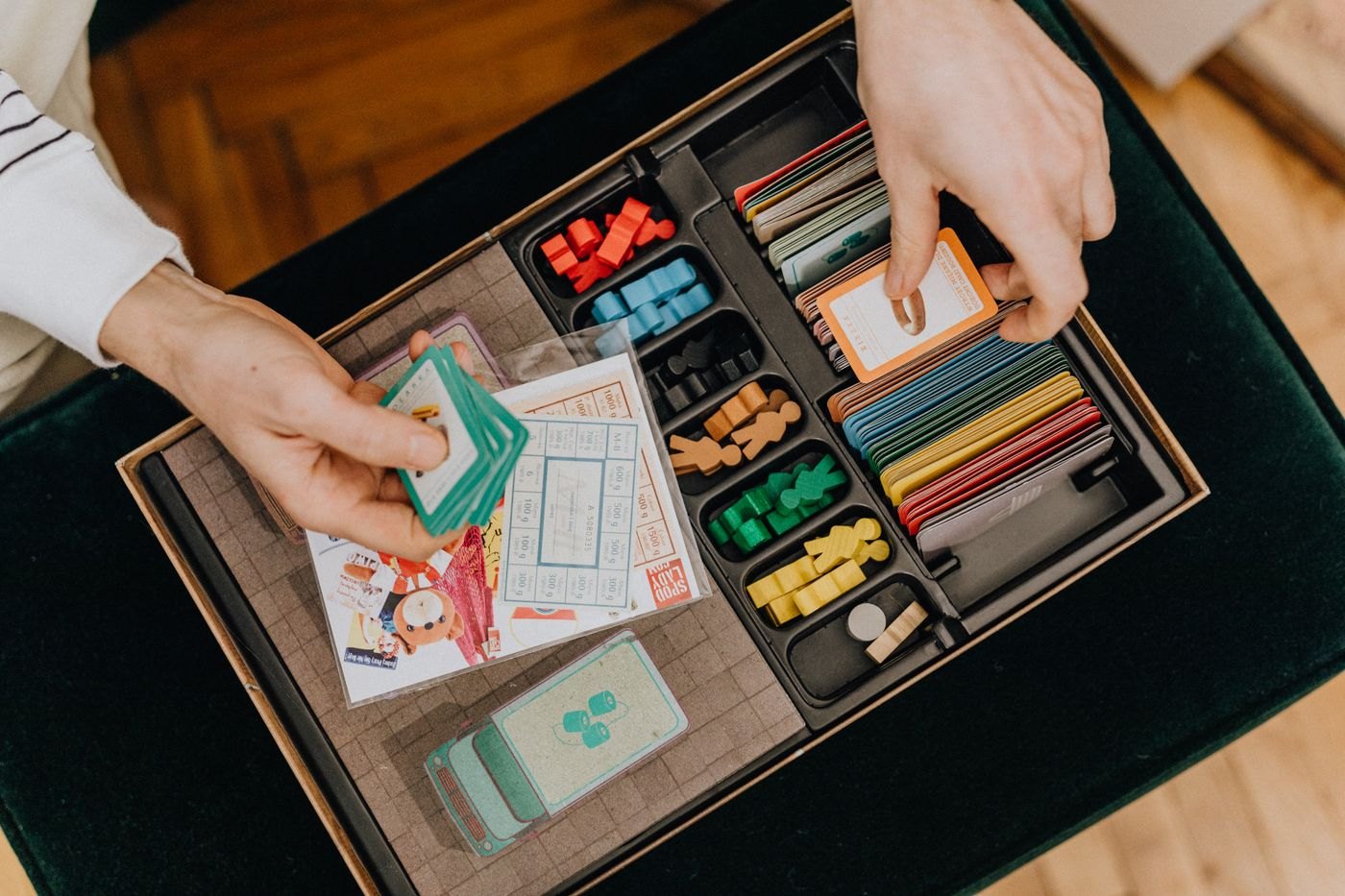
Label a homemade aid with the game edition and any included expansion. If a publisher correction changes a step, update all copies together. Otherwise two players can reasonably follow different instructions sitting at the same table. Store the aid beside the rulebook, not mixed into a deck with similar card backs.
A reference can grow during a first session, but remove temporary notes once the table no longer needs them. Keep the persistent rules questions and discard reminders that merely describe the initial setup. The finished card should make the next game easier to start and easier to keep moving.