Choose what needs to travel
Confirm that the game suits the destination’s player count, space and available time before packing it. If several boxes are competing for luggage space, choose the ones you realistically expect to play. Bringing every possible alternative can make carrying and keeping track of the collection harder.
Take the rules and required reference material. If you remove expansion modules or optional pieces, check that no base-game component is mixed into the material left at home. Use the setup instructions for the version you intend to play, not a rough memory of which bags were used last time.
Contain pieces within the box
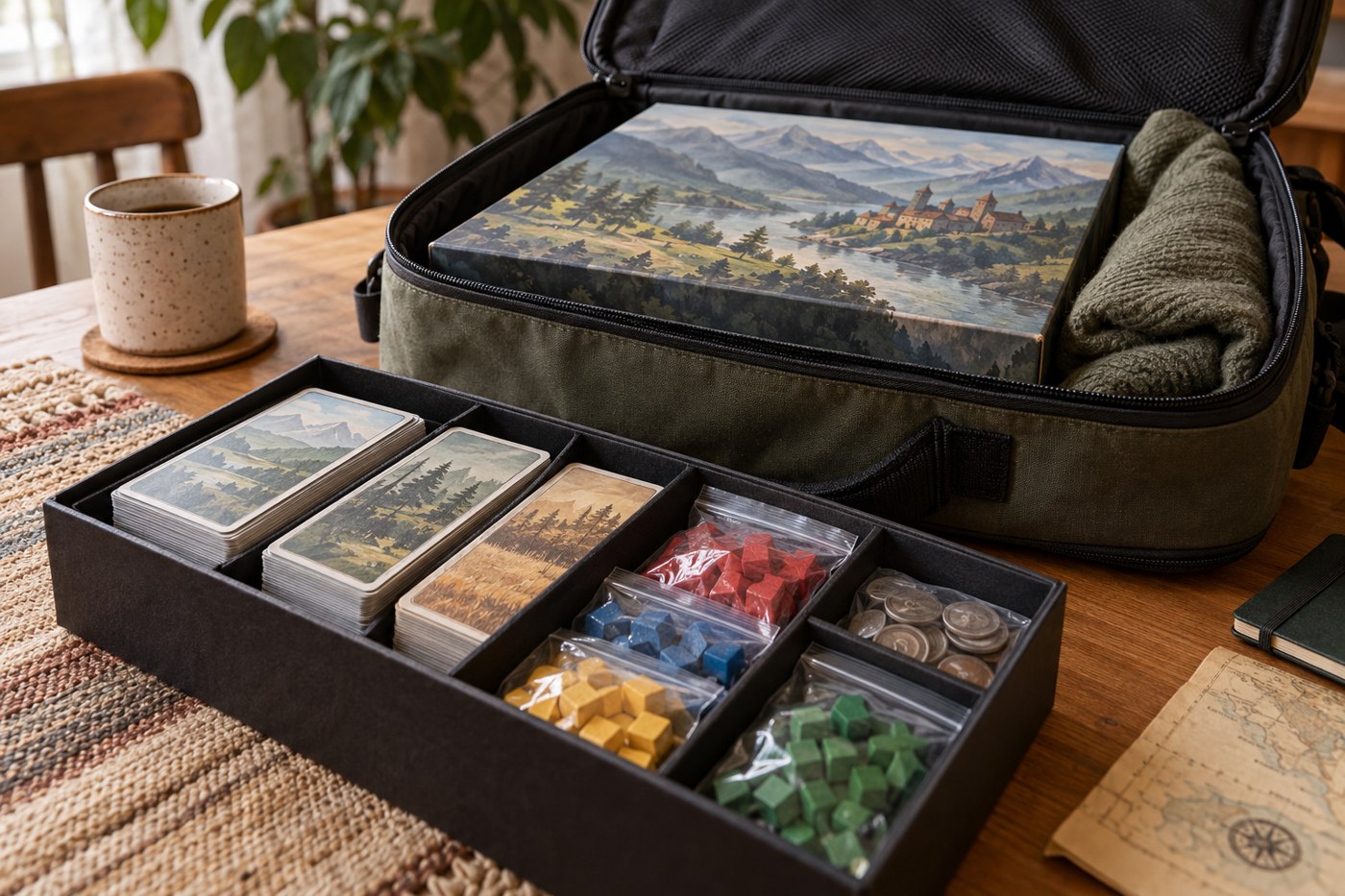
Close loose tokens in suitable bags or covered compartments. Keep player sets and decks grouped so the destination setup remains straightforward. A bag should close reliably without pressing sharp or delicate pieces against cards. Avoid overfilling a pouch until its contents form a hard lump under the lid.
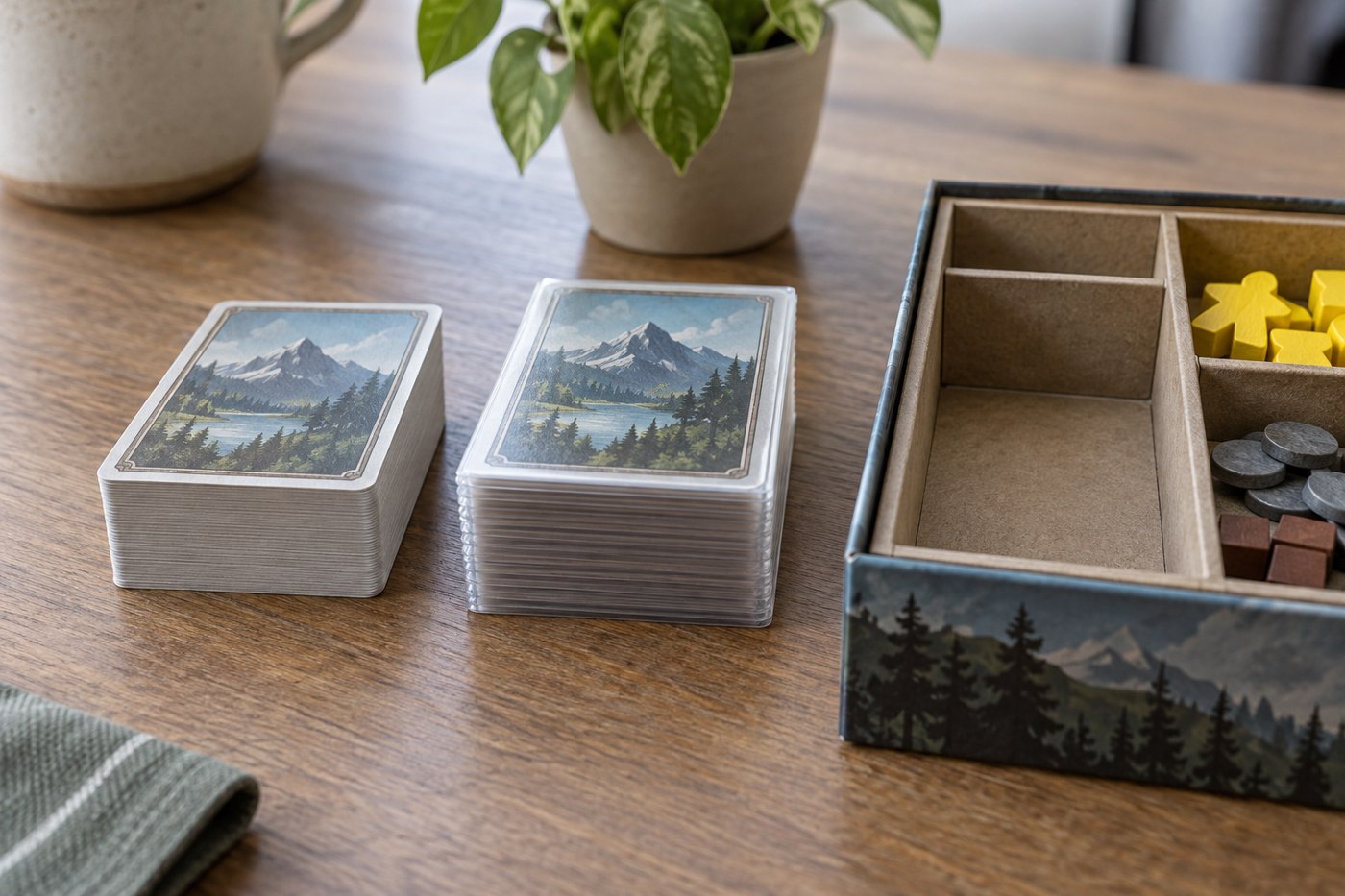
Check whether cards can slide out of their wells when the box is turned. Sleeved decks may behave differently from unsleeved ones. Support them without bending corners, and keep heavy components from resting directly on their edges. Use a suitable protective arrangement for unusually fragile pieces.
Secure the whole package without damaging it
Close the lid gently and check whether it stays aligned with the base. If an outer container or suitable reusable band is needed, choose one that does not crush the box or leave adhesive on its printed surface. A tight wrap is not a substitute for an organised interior.
Place the game in a bag or case with enough support and room for removal. A loose cover may protect against minor contact but not against heavy luggage above it. Keep the box clear of objects with hard projecting corners, and do not treat the lid as a carrying handle for the loaded base.
Plan for the journey’s environment
Keep games away from spills and unsuitable damp conditions. Do not place a cardboard box directly on a wet platform, pavement or vehicle floor. Use a suitable dry holding area during loading and unloading rather than leaving the package exposed while other luggage is organised.
Avoid unnecessary time in a hot vehicle or direct sun. Consider the whole journey, including waiting and transfers. If you cannot protect an especially valuable or delicate game adequately, a more robust alternative may be the better travelling choice.
Test the expected orientation
Before leaving, gently turn the closed package into the orientations it is likely to experience. Reopen it over a clear surface and check for migrated pieces, a shifted tray or a deck that has escaped its compartment. This practical check can reveal gaps that are invisible while the box remains flat.
Do not shake the package aggressively as a test. The aim is to inspect ordinary handling, not to create damage in order to prove the packaging is imperfect. If a component repeatedly moves, adjust the particular compartment rather than adding random padding everywhere.
Keep the return journey in mind
Bring the bags, labels and supports back into use when packing at the destination. A late-night hurried cleanup is when components often enter the wrong box. Leave enough time to identify the original groups and check the play area before departure.
If someone else helps, explain the packing order or show a photograph. Keep drinks and snacks away from the open box during cleanup. The same organisation that made setup easy should make the trip home straightforward too.