Identify the true round boundary
Find the rule that ends a round: everyone passing, a fixed number of turns, a timer or a depleted supply. Do not start cleanup merely because one player has finished their actions. In games with unequal numbers of actions, other players may still have decisions to make.
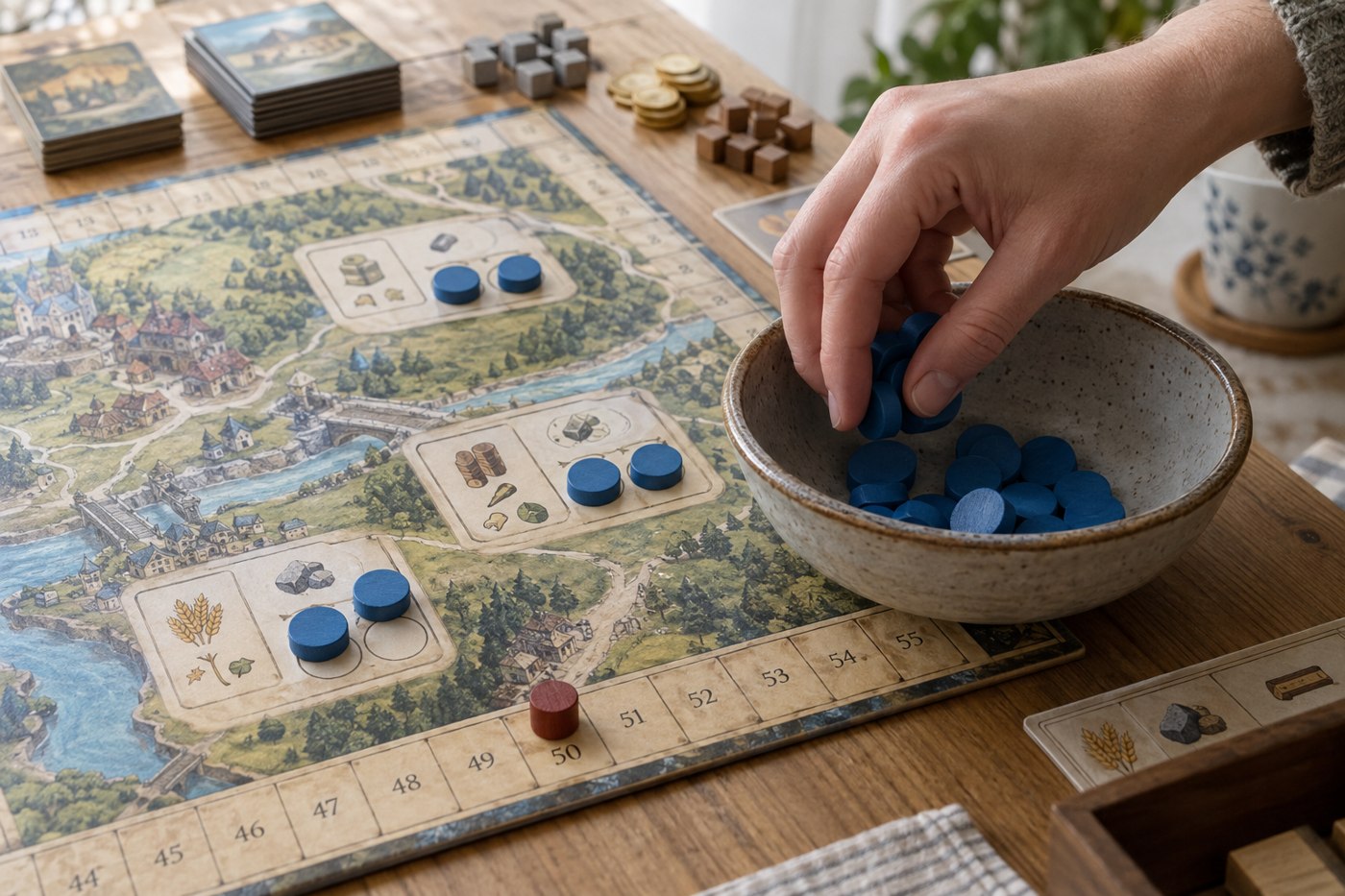
Announce the end trigger when it occurs, then check whether a final turn or effect remains. Put a marker near the round sequence if the conversation is likely to interrupt it. The marker is only a reminder; it should not cover information or resemble a playable piece.
Follow one visible sequence
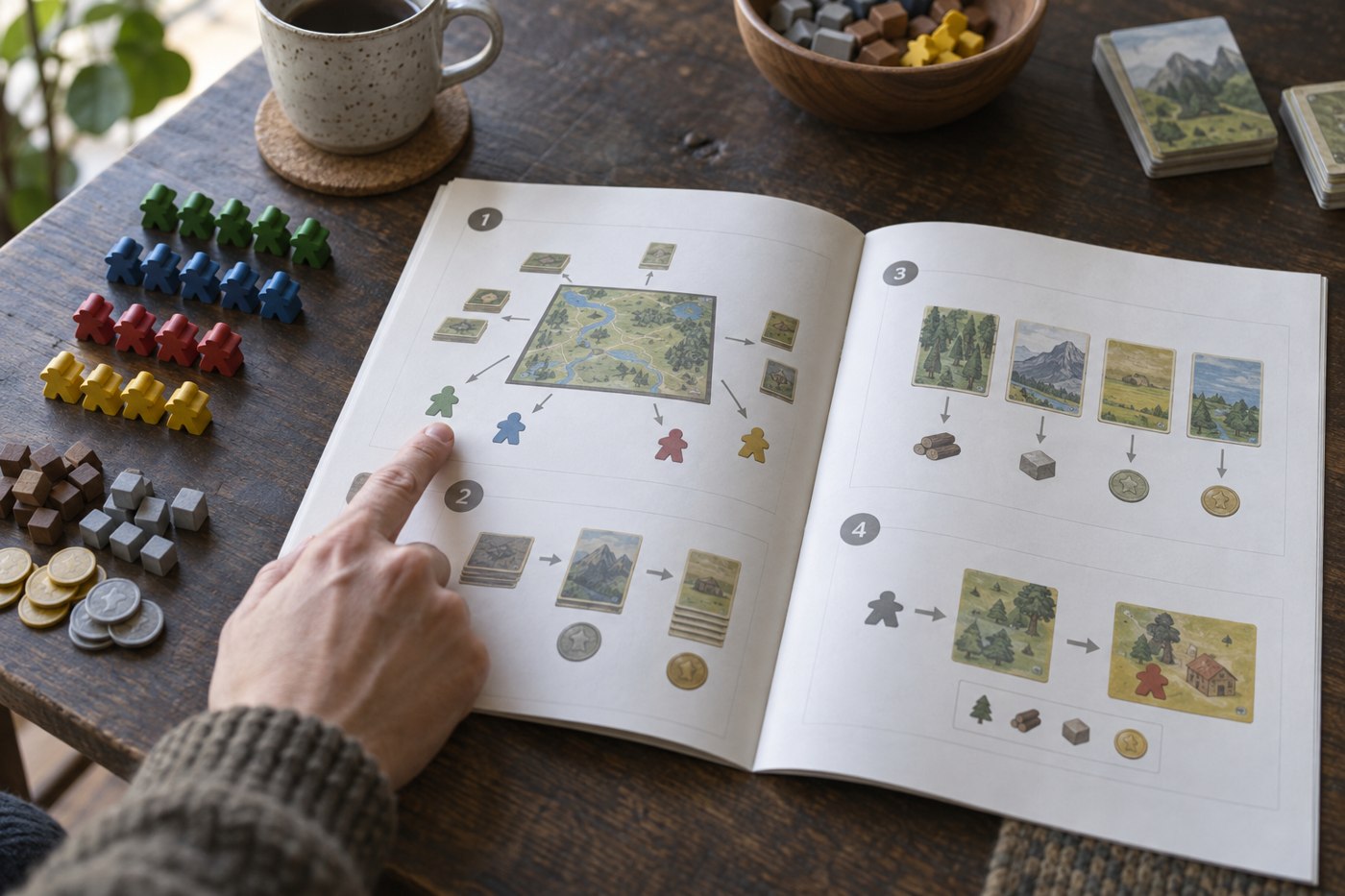
Keep the published upkeep order nearby. If the game lacks a concise summary, make a short reference using the printed phase names. Separate shared steps from individual ones. For example, returning workers may be personal while advancing a round track is shared; everybody doing the latter would move the game ahead too quickly.
Move down the sequence deliberately. Refilling a display before discarding old cards may produce a different market from discarding first. Income calculated before resetting a track can differ from income calculated after. Steps that look administrative can still have strategic consequences, so do not reorder them for convenience without checking.
Share jobs without losing accountability
Assign obvious physical jobs if helpful: one person handles a public deck, another advances the round marker after the required steps are complete. Avoid assuming that the most experienced player must perform every operation. Explain each job so others can take it over when seats or hosts change.
Have players resolve their own personal upkeep and indicate completion with a simple spoken confirmation. Do not use a new token convention if it will be confused with game state. When a personal effect is optional, let its owner decide before the shared sequence continues.
Start the next round only after checking
Before the first action, confirm that the market, income and first-player status are correct. This takes less effort than correcting them after someone has drawn a card. If the sequence is interrupted, resume from the last confirmed step rather than repeating the whole process and risking a second reward.
During the first game, a brief verbal walkthrough is useful. In later sessions, keep the reference available but let the familiar routine become quieter. The aim is dependable timing, not a ceremony that makes every round feel longer. If the same item is repeatedly missed, improve its reminder rather than adding unrelated checks.
Optional effects deserve their own pause. If a player must decide whether to spend something during upkeep, avoid automatically collecting or resetting that resource first. Point to the relevant decision, allow its owner to respond, and then continue the shared sequence.