Find the official adjustment points
Look in the solo rules, scenario setup and any difficulty appendix. Some games provide several levels; others offer introductory modules or recommended beginner configurations. Confirm whether the setting changes setup only or continues to affect procedures throughout play.
Use instructions for the edition and expansion combination you own. A level number from one scenario may not mean the same thing in another. If a publisher provides an updated clarification, check whether it corrects a rule or introduces an optional variant before applying it.
If a setting adds a special rule, place a reminder where the relevant step happens. A difficulty card left under the box can make an otherwise careful session use the wrong procedure for several rounds before you notice.
Choose a reason for the change
You might want more pressure after repeated comfortable wins, a gentler introduction to an unfamiliar character or room to enjoy the story without repeated attempts. Any of these can be a sensible reason. Difficulty is a way to shape the session, not a badge you must earn.
Consider whether the last result actually indicates the current level is unsuitable. A single lucky win or unlucky loss may be less informative than several sessions. First check common setup and upkeep errors, especially if an automated opponent seemed surprisingly passive or overwhelming.
Change one major variable at a time
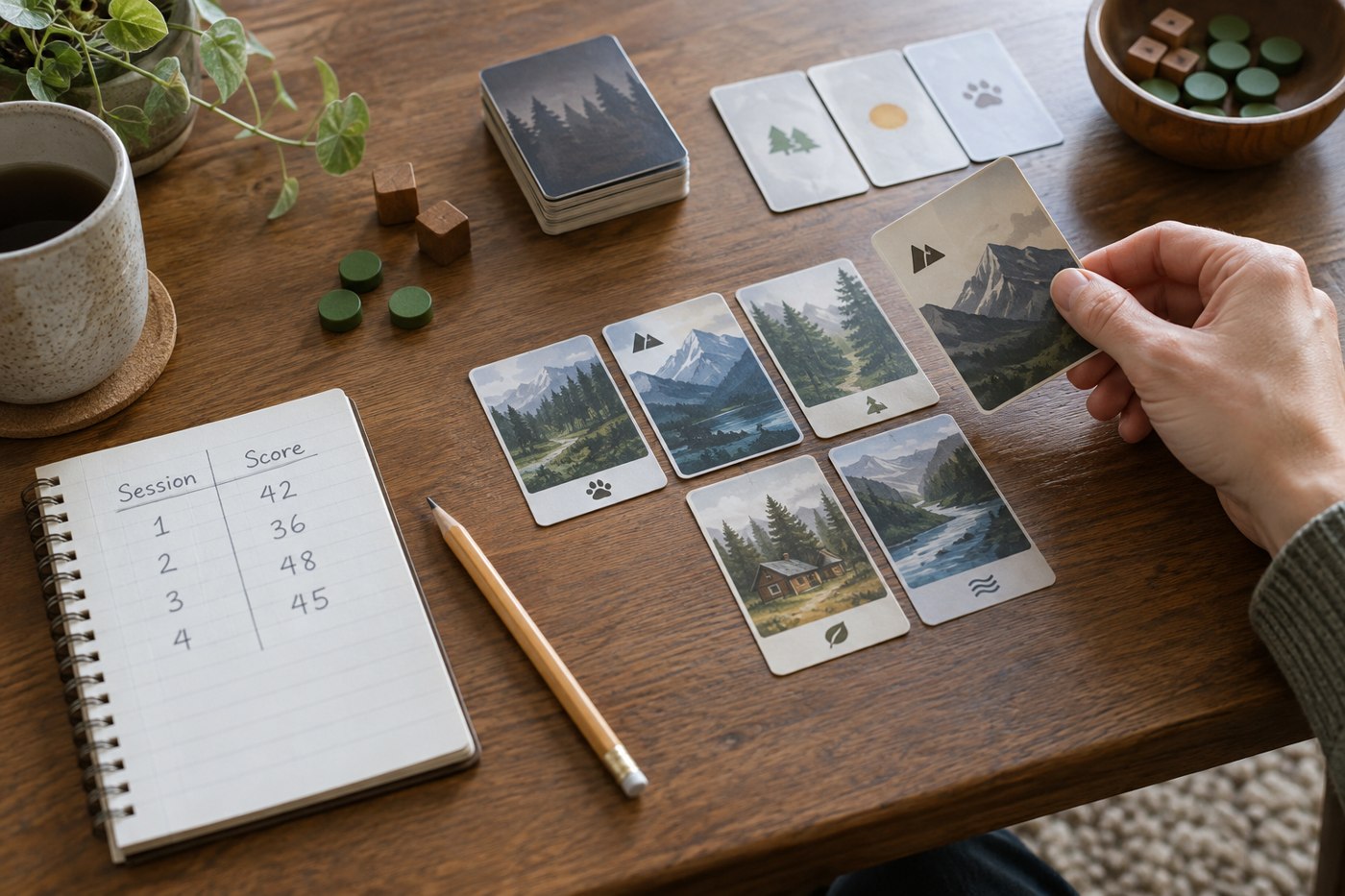
If you raise difficulty, add an expansion and learn a new character simultaneously, it becomes difficult to understand why the experience changed. Try one adjustment first when your aim is to compare. Keep a short note of the configuration so you can repeat or reverse it.
Some published settings are designed as packages and should not be separated. Follow the instructions rather than selecting only the parts that seem convenient. Combining individually optional modules can also create interactions the basic level description does not capture.
Avoid quiet midgame corrections to the challenge
Giving yourself an extra resource after a bad draw changes the attempt's conditions. You may choose to do that in a learning session, but recognise it as a practice adjustment rather than a normal result at the original level. Do not let an informal rescue become a rule you later misremember as official.
If a setting proves unsuitable, you can stop and restart with a different configuration. In a campaign, check whether changing difficulty between scenarios is allowed and what record must be updated. Do not assume that every game permits an adjustment at any point.
Assess the experience, not only the outcome
Ask whether you had meaningful decisions, understood why pressure increased and felt interested in another attempt. A close loss can be enjoyable; an easy win can still be a useful learning session. The number of wins alone does not describe whether the setting fits.
Keep the level that supports the kind of play you want. You can return to a harder challenge later, or stay with a familiar setting while exploring different approaches. Published options exist to help players shape that experience consistently.