Decide what you want to do at the table
Start with the activity rather than a list of highly rated titles. Do you want a clear challenge to win, a relaxing sequence of decisions, a story that continues between sessions or an opponent-like presence? A score challenge may feel satisfying to one player and directionless to another. Neither reaction means the game is badly designed; the goal may simply not match the evening.
Think about interaction you would normally enjoy with other people. If bargaining and reading opponents are your favourite parts of multiplayer games, a solitary resource puzzle may feel quite different. An automated rival can create competition for spaces or rewards, but it usually follows a procedure rather than holding a conversation or making human-style plans.
Check what one-player support actually means
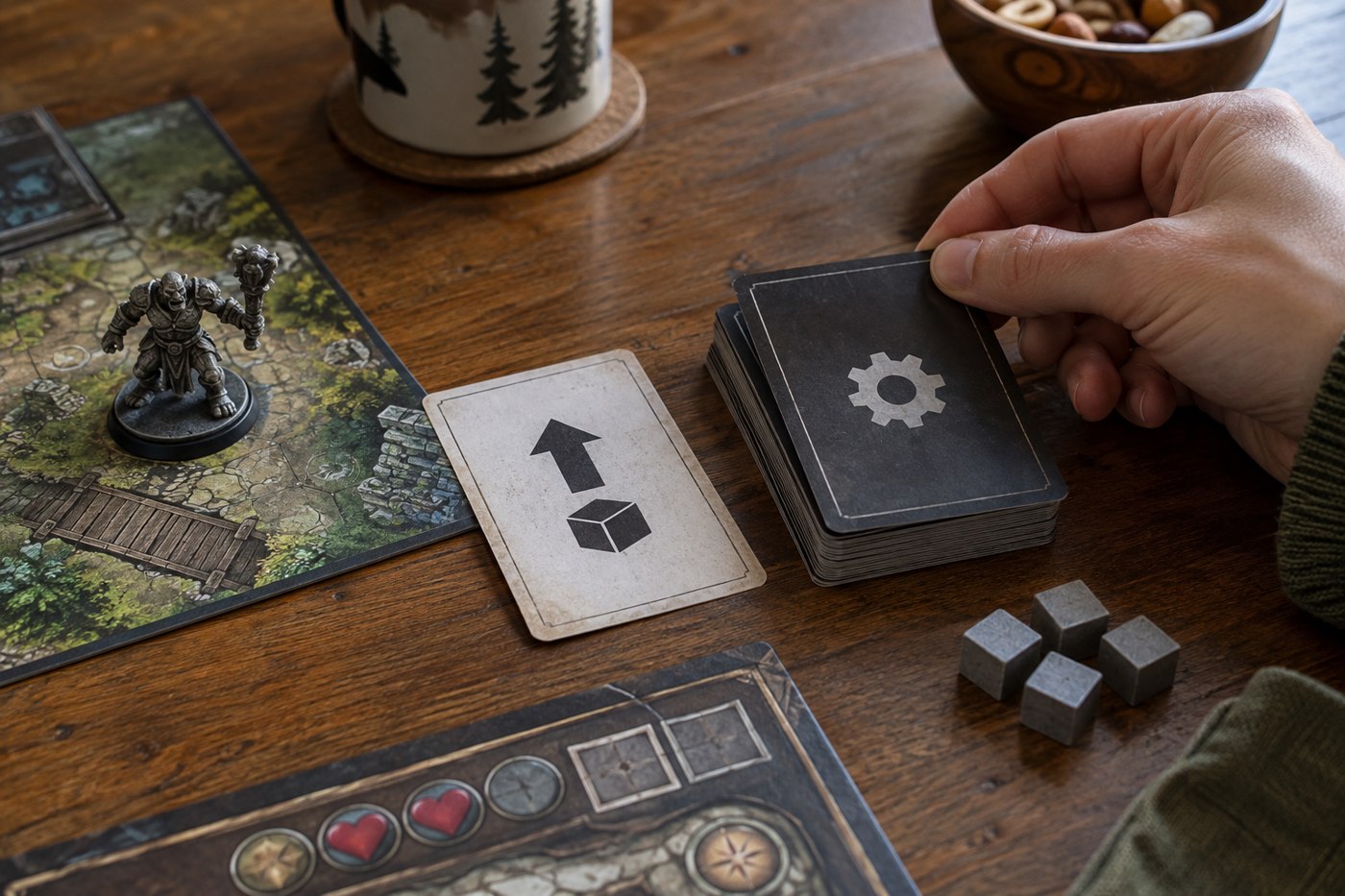
Read the official solo rules before buying if they are available. A one-player mode may be built into the main system, use a separate opponent deck or require you to control more than one character. Check whether the necessary components are included in the edition being sold. An optional solo expansion and a built-in mode are different purchases.
Distinguish published solo support from a community variant. A variant may be enjoyable, but it can have different testing, documentation and component requirements. For a first game, clear instructions and a straightforward setup can be more valuable than a large quantity of optional content. Verify the exact version rather than relying on a player-count label from another edition.
Include administration in the experience
Solo play leaves you responsible for both your decisions and the system's upkeep. An automated opponent may need cards drawn, priorities checked, pieces moved and scoring adjusted. This can create an interesting rival, but it is also work you perform between your own turns.
Look at a sample round in the rules. Count how many separate procedures occur after your action and how much information you must keep track of. A game with a simple player turn can still be demanding if the opposition has many exceptions. Decide whether you enjoy operating that machinery or would prefer a direct puzzle with less bookkeeping.
Measure the practical commitment
Consider setup and packing as well as playing time. A sprawling game may be comfortable if you have a table where it can remain safely arranged. The same game can be inconvenient if every session must fit between dinner and clearing the room. Read the component layout and saving instructions before assuming a long session can be divided easily.
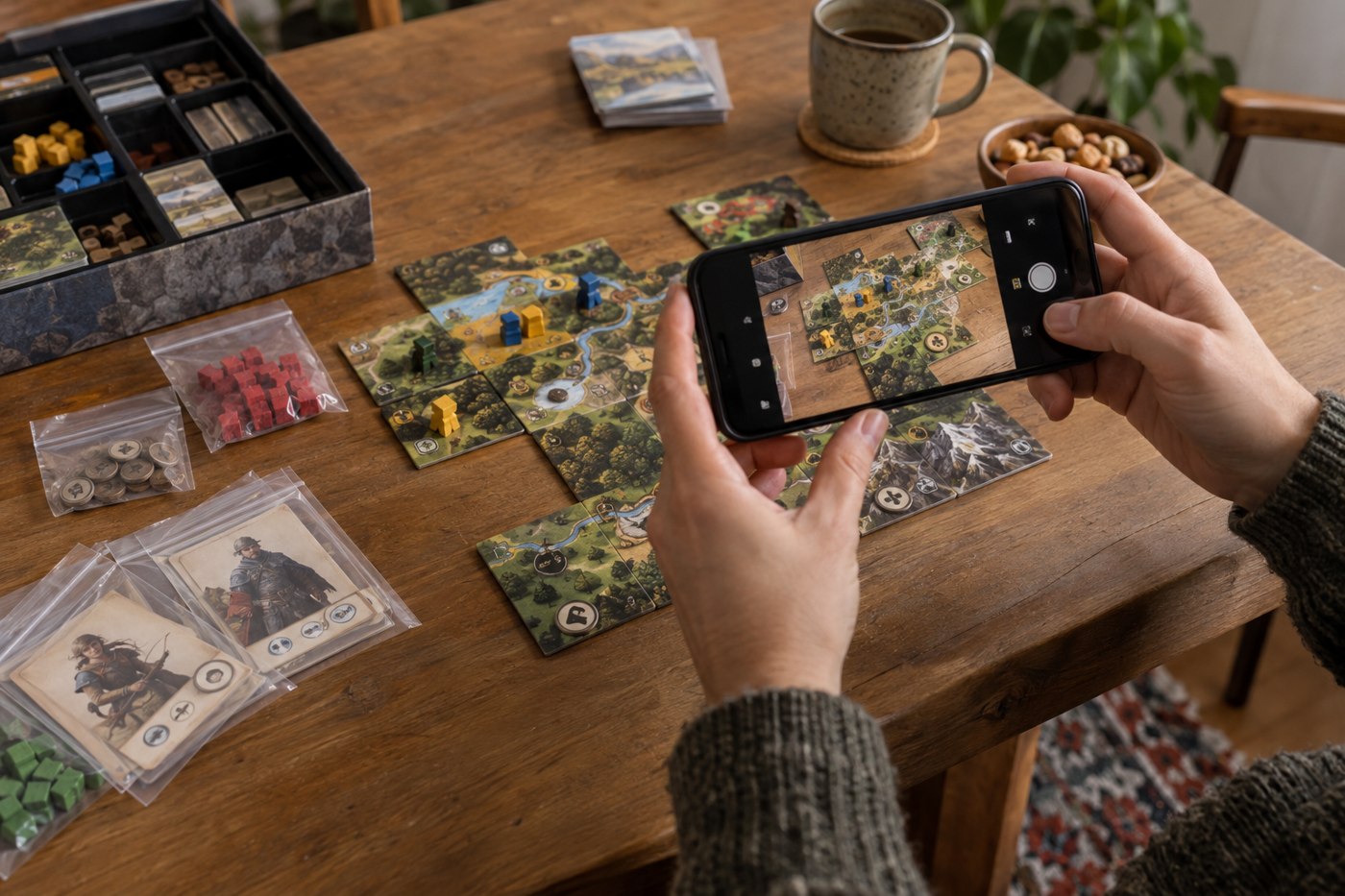
Check table footprint, lighting and storage. Playing alone does not automatically make the layout small; controlling several characters can require more personal boards and hands than playing one seat in a group. If you need a compact experience, inspect an actual setup image or rulebook diagram instead of judging by the box's width.
Choose a learning path you can follow
A good starting experience has a clear first setup, a readable turn sequence and a way to check ordinary questions. Look for an introductory scenario or recommended beginner configuration. A long reference document can be useful later, but your first session should not depend on understanding every expansion and difficulty module.
Plan the first play as a learning session rather than a test of whether you are good at solo games. Pause, look up rules and restart a small example when needed. Avoid changing rules simply because an early outcome feels harsh; first confirm that the setup and procedures are correct.
Know what will make you return
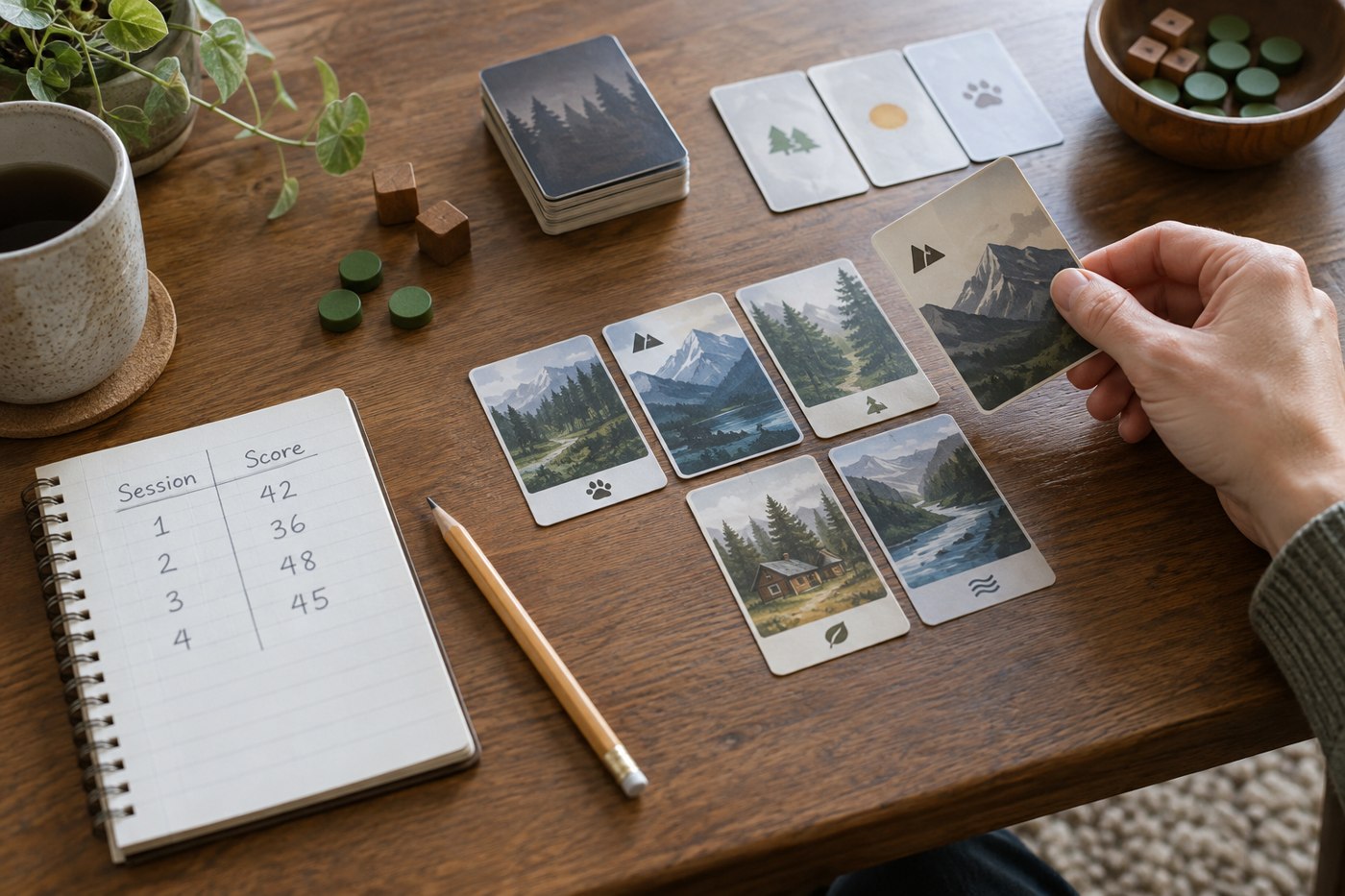
Replay appeal can come from variable setups, different characters, new scenarios or improving your understanding of a fixed puzzle. Ask which kind interests you. A campaign offers continuity but also a commitment to preserving progress; a standalone session is easier to revisit after a long gap.
If possible, borrow or try the game before committing to a large box. Notice how you feel about the upkeep, not just the dramatic moment of winning or losing. A game you are happy to set up on an ordinary evening is more likely to be played than one admired mainly for the amount of content it contains.