Look at the room before the shelf
Check for water entry, condensation and persistent musty smells. Notice whether the location changes with weather or season. A room that feels fine during one visit may still have recurring problems. If dampness is present, address its source or move the games to a suitable location rather than relying on extra packaging alone.
Avoid placing cardboard directly against surfaces known to become damp. Leave the clearances required by the shelving and room arrangement so you can inspect the area. Keep the collection accessible enough that checking a wall or floor does not require dismantling an unstable pile.
Store only dry contents
Do not close a game that has damp components or packaging and assume the problem will disappear inside the box. A sealed container can trap moisture already present. Follow any relevant publisher or material guidance when dealing with affected components, and avoid improvised heat treatments that may damage printing or adhesives.
After travel, inspect boxes that have been exposed to rain or a damp bag. Separate a suspect item from the rest of the collection while you assess it. Surface appearance alone may not show what happened inside a tightly packed box.
Use containers for a clear purpose
An outer container may protect a game from dust or incidental contact, but it does not automatically create suitable long-term conditions. Check whether its closure and materials suit the intended use. Do not describe an ordinary lid as waterproof without a basis for that claim.
If using any moisture-control product, follow its instructions and keep it safely separated from game pieces. Such products are not a repair for a room with an unresolved water problem. Avoid making the collection harder to inspect by adding layers that nobody wants to open.
Check regularly without overhandling
Look for changes in box shape, odour, surface texture or the fit of lids. A new problem affecting several neighbouring boxes may point to the storage location rather than the games themselves. Keep a simple note of when a concern appeared if that helps identify a seasonal pattern.
Do not force swollen components into their old compartments. Handle affected items carefully and seek appropriate guidance where damage or contamination is suspected. The priority is to prevent further problems, not to restore a tidy-looking shelf immediately.
Choose access over a hidden spare corner
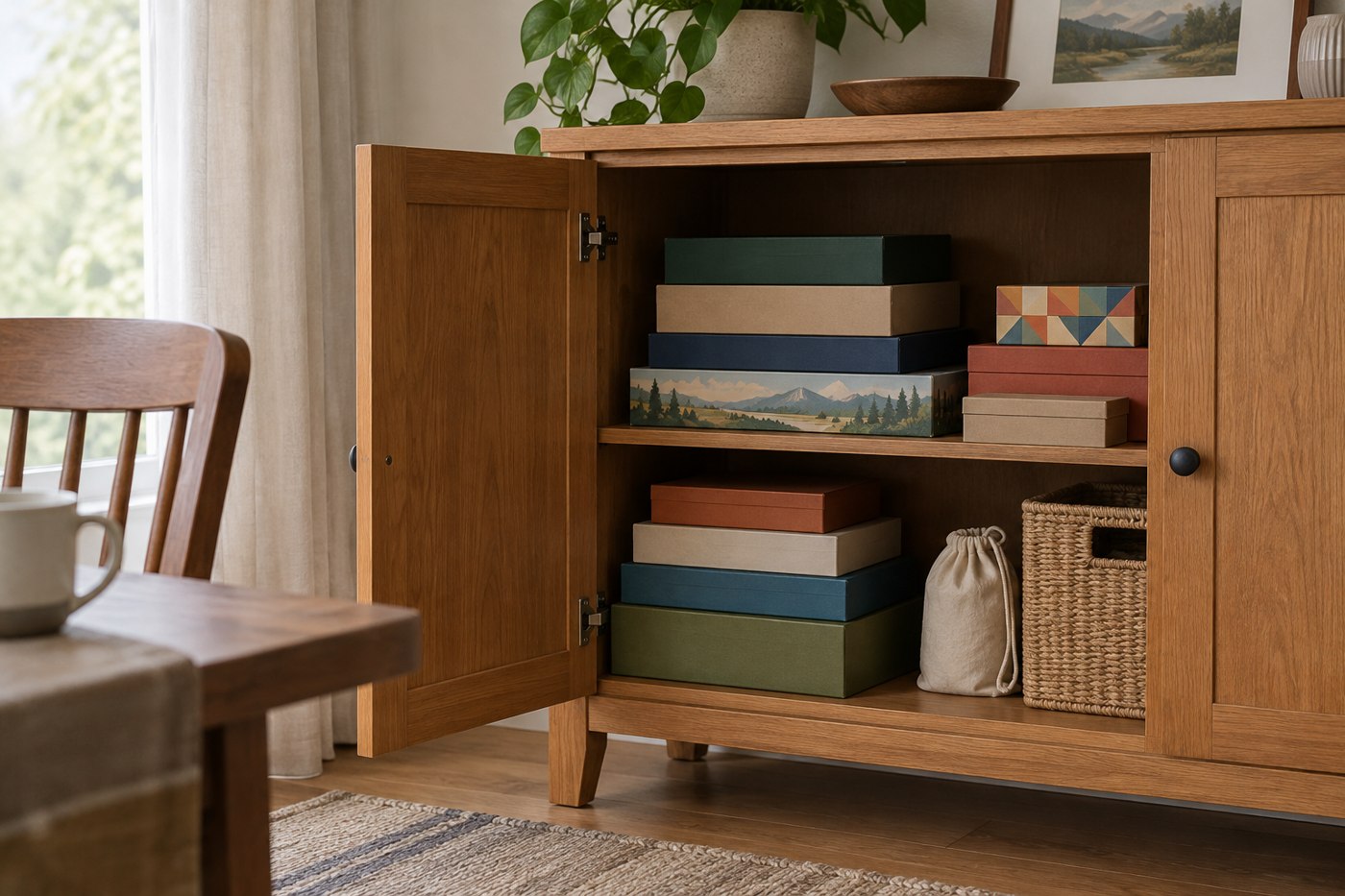
A visible, stable shelf in a suitable room can be more practical than a large but rarely checked storage area. Games are easier to maintain when you can remove one safely, inspect its condition and return it without compressing the surrounding boxes.