Clear the whole footprint
Move unrelated papers, charging cables and small objects away from the playing area. Include space for personal cards and shared supplies, not only the central board. A tidy rectangle in the middle of an otherwise crowded table leaves the edges just as awkward to use.
Choose a separate place for drinks and food where possible. If they remain nearby, keep them away from paths used to pass components. Do not depend on everyone remembering to reach over a full glass carefully throughout the evening.
Remove crumbs and residue
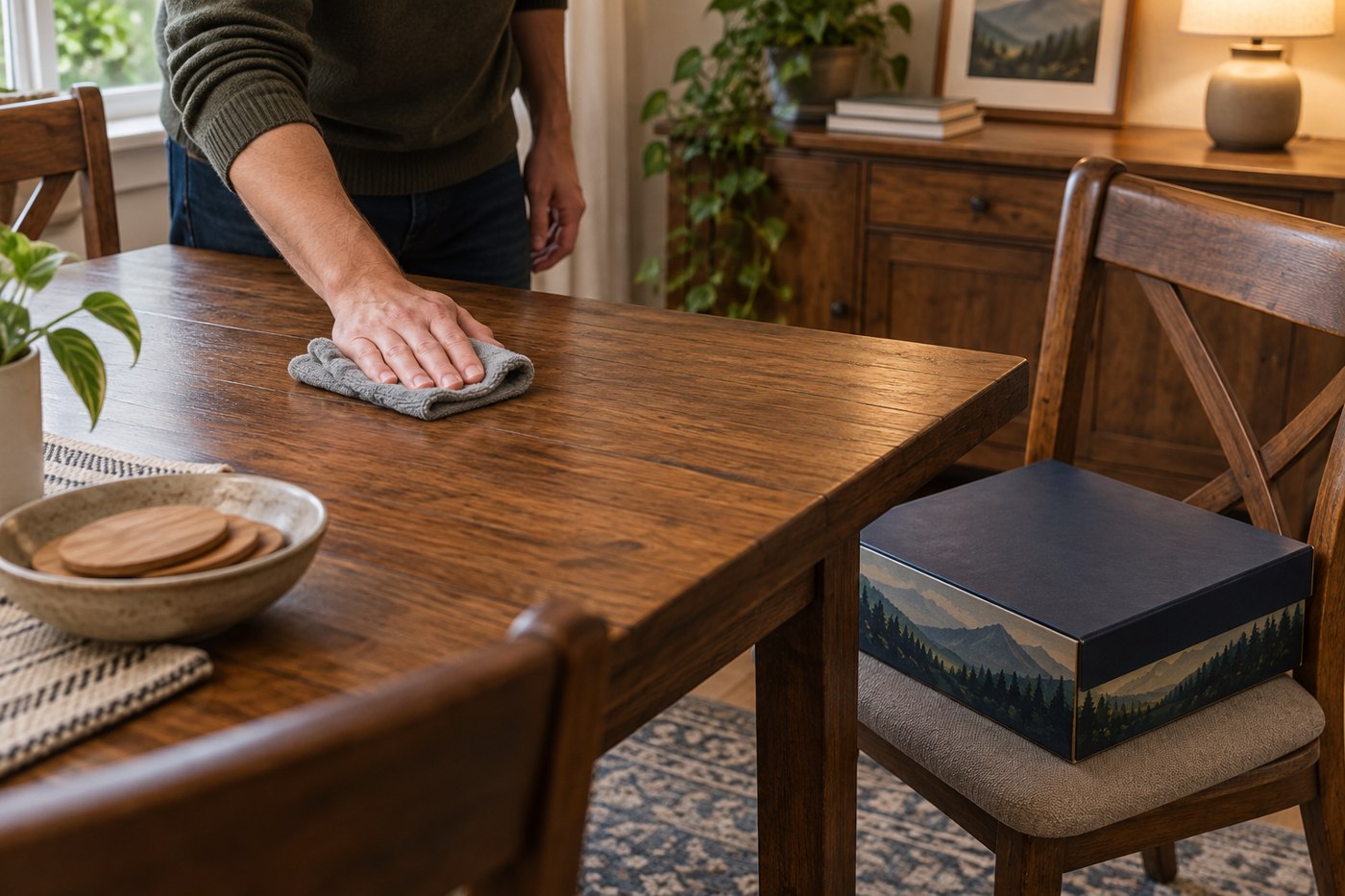
Check the surface for grit, sticky patches and food fragments. Use a cleaning method appropriate to the table material and its care instructions. Keep cleaning products away from game components and avoid treating the game itself as part of the furniture-cleaning task.
Allow the surface to dry completely before placing cardboard, cards or a playmat on it. A quick wipe can leave moisture even when the table looks clean. Follow the product’s instructions rather than assuming that a stronger cleaner produces a better game surface.
Check the covering you will use
Inspect a cloth or mat for trapped grit, dampness and folds. Lay it flat so pieces do not catch on ridges or slide into a crease. If a game depends on a particular surface for flicking or sliding, follow its setup guidance before adding a covering.
Keep the empty box in a dry place off busy walkways. It should remain easy to reach for packing without becoming a tray for snack wrappers or unrelated items during play.