Describe a turn without the story words
Translate a sample action into plain operations. Building a settlement might mean paying a set of resources to place a tile. Exploring a galaxy might mean drawing a card and choosing whether to risk another draw. This is not a way to dismiss the theme. It is a way to see the activity you will spend the evening performing.
Watch a rules demonstration long enough to follow one complete turn. Include preparation and cleanup, not just the dramatic central action. Ask what the player chooses and what the system determines automatically. A theme can suggest freedom while the actual game offers a narrow but interesting set of decisions.
Notice how theme helps the rules
A strong connection between story and procedure can make an action easier to remember. Paying timber to build something may feel intuitive, while an unusual symbol exchange may need more explanation. However, intuitive story logic is not a rule. A move that sounds plausible in the fictional world may still be illegal in the printed system.
Some games use theme mainly for atmosphere, while others make it central to clues, objectives or changing events. Decide which relationship matters to you. A familiar theme can make abstract choices pleasant; it does not need to simulate every real-world detail to be worthwhile.
Check whether the mechanism fits the group
A group interested in a historical subject may not enjoy the negotiation or direct conflict used to represent it. People attracted to whimsical artwork may still face difficult resource planning. Explain the social and decision structure honestly when proposing a game, rather than relying on the cover to communicate the experience.
Likewise, a theme that initially seems uninteresting can accompany mechanisms the group enjoys. If you like drafting or route planning, examine how the game uses those activities before dismissing it. You are choosing a combination of subject, presentation and repeated decisions, not a single category.
Distinguish thematic novelty from a new role
When expanding a collection, compare the actual turns with games already on the shelf. Another theme may be enough reason to buy if you enjoy that presentation, but it may not broaden the occasions your collection serves. Be clear about whether you want a different experience or another version of a familiar one.
Avoid assuming that two games sharing a mechanism are interchangeable. One drafting game may emphasise relaxed set collection, another fierce competition for scarce effects. Look at pacing, information and interaction alongside the mechanism label. The label narrows a search; it does not finish the comparison.
Use both descriptions when inviting people
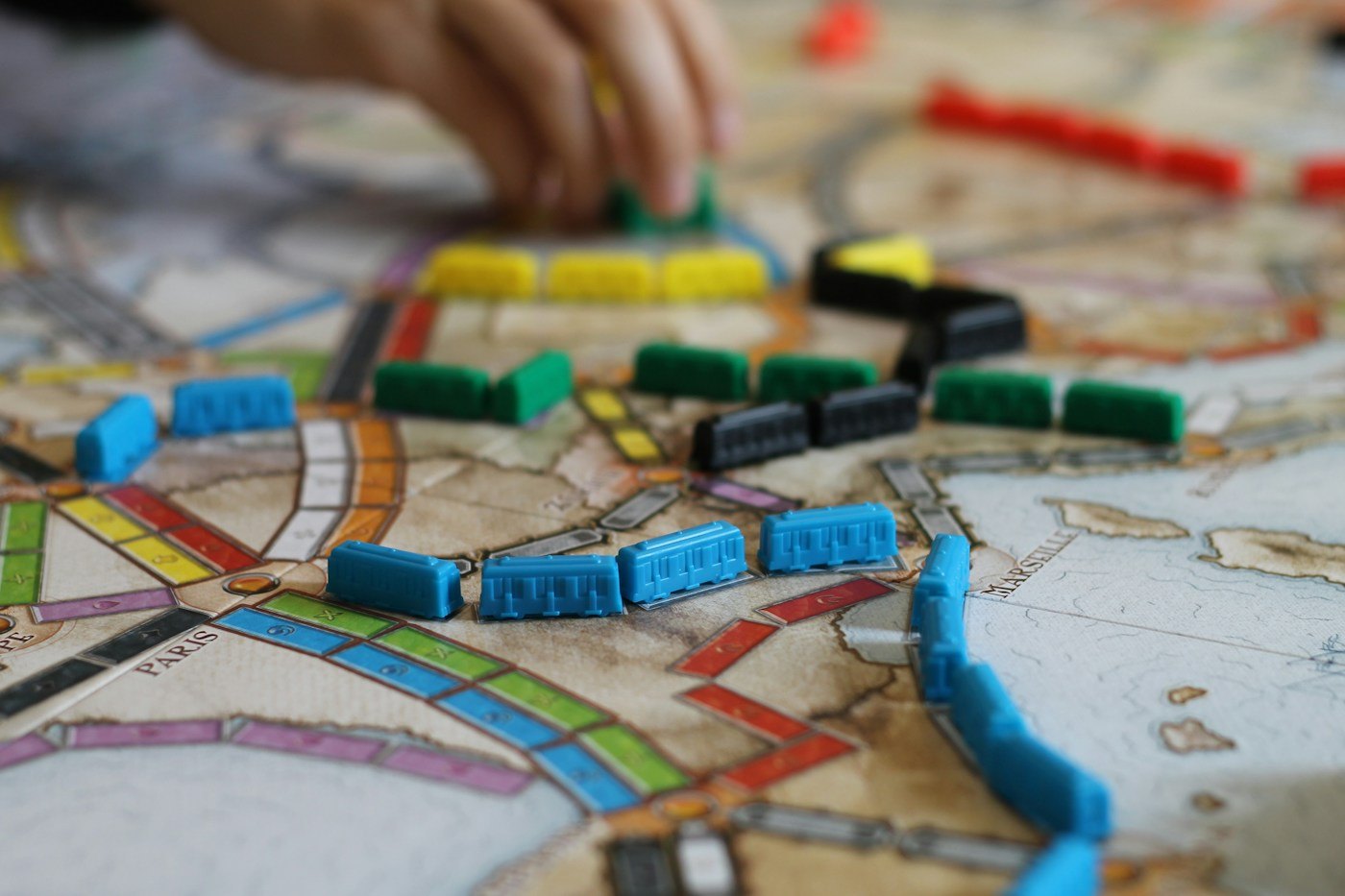
Describe a proposed game with one sentence about the setting and another about what players do. For example, a fictional railway game might involve building routes and competing for shared cards. That gives people a more accurate basis for accepting than a claim that it is simply about trains.
Pay attention to what the artwork asks you to imagine between actions. A theme can make an otherwise simple exchange feel coherent or memorable. That contribution is real even when the system is abstract; it simply should not obscure the practical question of whether you enjoy making the exchange repeatedly.