Start with the usual table
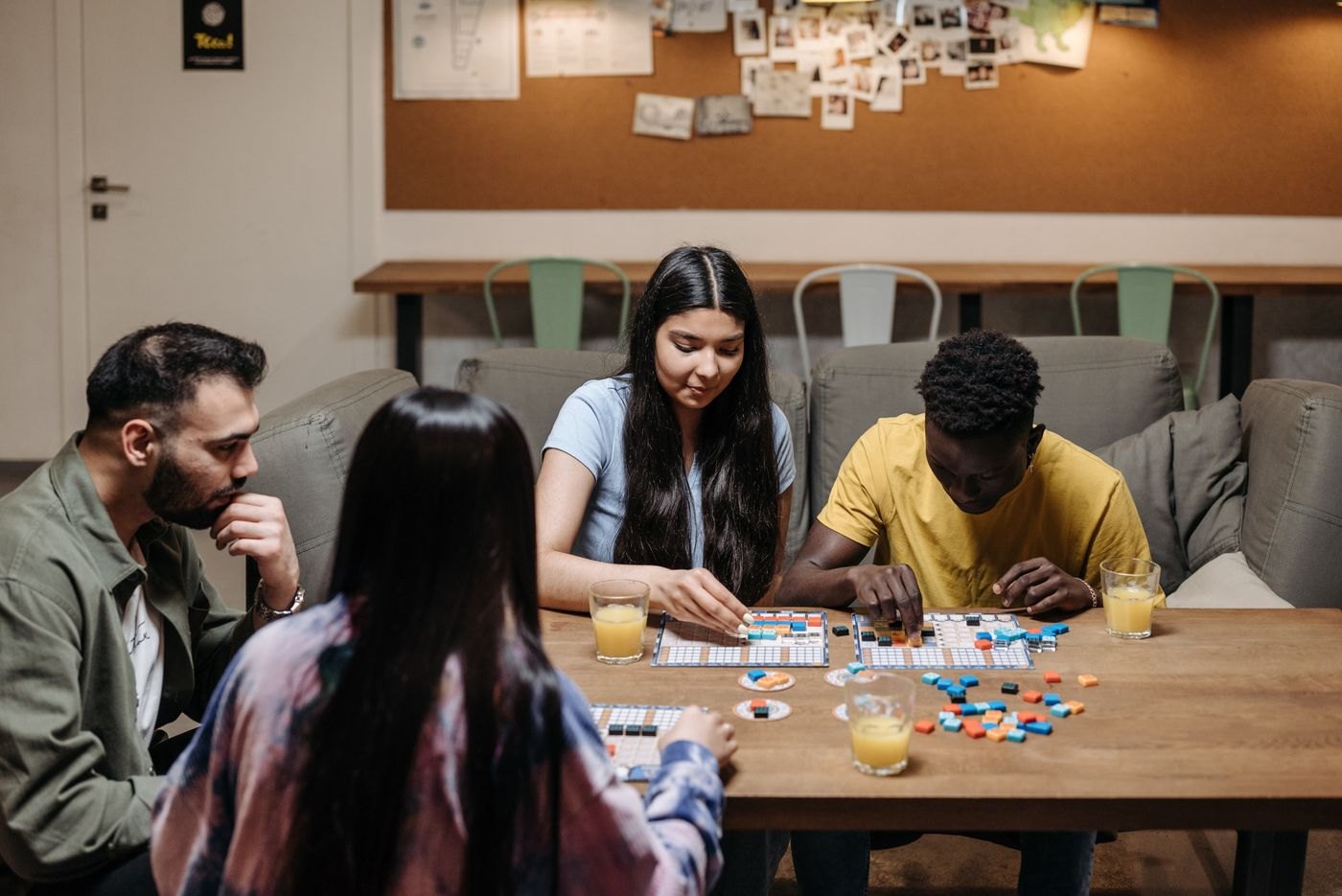
Write down the number available on an ordinary evening. If that is two, treat two-player suitability as the main requirement even if you occasionally host five. A game purchased mainly for rare gatherings may leave you without something suitable for the people who are actually present most weeks.
Check the official rules for the intended count, including setup adjustments. Reduced maps, removed cards, blocked spaces and altered resource pools can help a game adapt. Their existence does not automatically make the experience better or worse; what matters is how they change the decisions you want to make.
Inspect the smallest supported count
Some games preserve their main structure with fewer people, while others introduce an extra controlled participant or a special variant. Read who manages that participant and how its choices are determined. If two people must jointly operate a third seat, consider whether that administrative work sounds enjoyable or distracting.
Look at interaction. An auction, negotiation or majority contest may feel different when there is only one opponent. Every trade can become a direct comparison between the same two people. A game centred on independent personal puzzles may change less socially, although available options and competition for resources can still differ.
Inspect the largest supported count
More players can create livelier conversation and more varied competition, but may also lengthen the interval between decisions. Count what a player does while others act. Planning, negotiating, reacting or choosing simultaneously can keep people engaged; simply waiting for an unchanged personal turn may feel slower.
Read how round count and available resources scale. A larger group may play the same number of rounds with more turns in each, or receive fewer turns per player. Those structures produce different pacing. A game that ends when a shared deck empties can also give each player a different number of opportunities as attendance changes.
Distinguish official support from preference
A publisher's range establishes that a rules mode exists, while a reviewer's preferred count expresses an experience. Both can be useful if you understand the distinction. Look for explanations of why a count felt good: tighter competition, less downtime or more negotiation. A bare best-at-four label tells you little about whether your group values the same thing.
When reading accounts of play, check whether they used the current edition and included an expansion. An expansion that adds seats may also change the board or pace. Do not assume an old comment about the base game describes the enlarged version, or that extra components automatically make every additional seat equally satisfying.
Account for actual group behaviour
A familiar group making quick decisions can move through a game differently from new players reading every card. Social conversation also changes duration. Consider the group's habits without labelling slower players as a problem. Some games invite detailed planning, and those decisions are part of what people came to enjoy.
Check elimination and team structures. A printed six-player count may mean three teams, or may leave someone watching after an early loss. If your aim is six people participating together for the whole evening, inspect those details explicitly. The number alone does not guarantee equal ongoing involvement.
Try the relevant count when possible
A demonstration with four people cannot fully answer how the game feels with two. If borrowing or attending a game library, try the count you expect to use most. Notice how often you make meaningful choices, how many options remain after others act and whether the game ends at a satisfying point.
If you cannot try it, read the setup and a normal round for your count, then picture the physical sequence. This will not predict enjoyment perfectly, but it can reveal obvious mismatches. Buying for a clear regular role is more reliable than choosing the widest printed range and hoping it serves every occasion equally well.
If your attendance varies regularly, consider two games covering different counts instead of asking one box to do everything. This is especially useful when the smaller group wants quiet planning and the larger gathering wants conversation. One broadly supported game can still work, but flexibility should be demonstrated rather than assumed.