Separate the worker from the reward
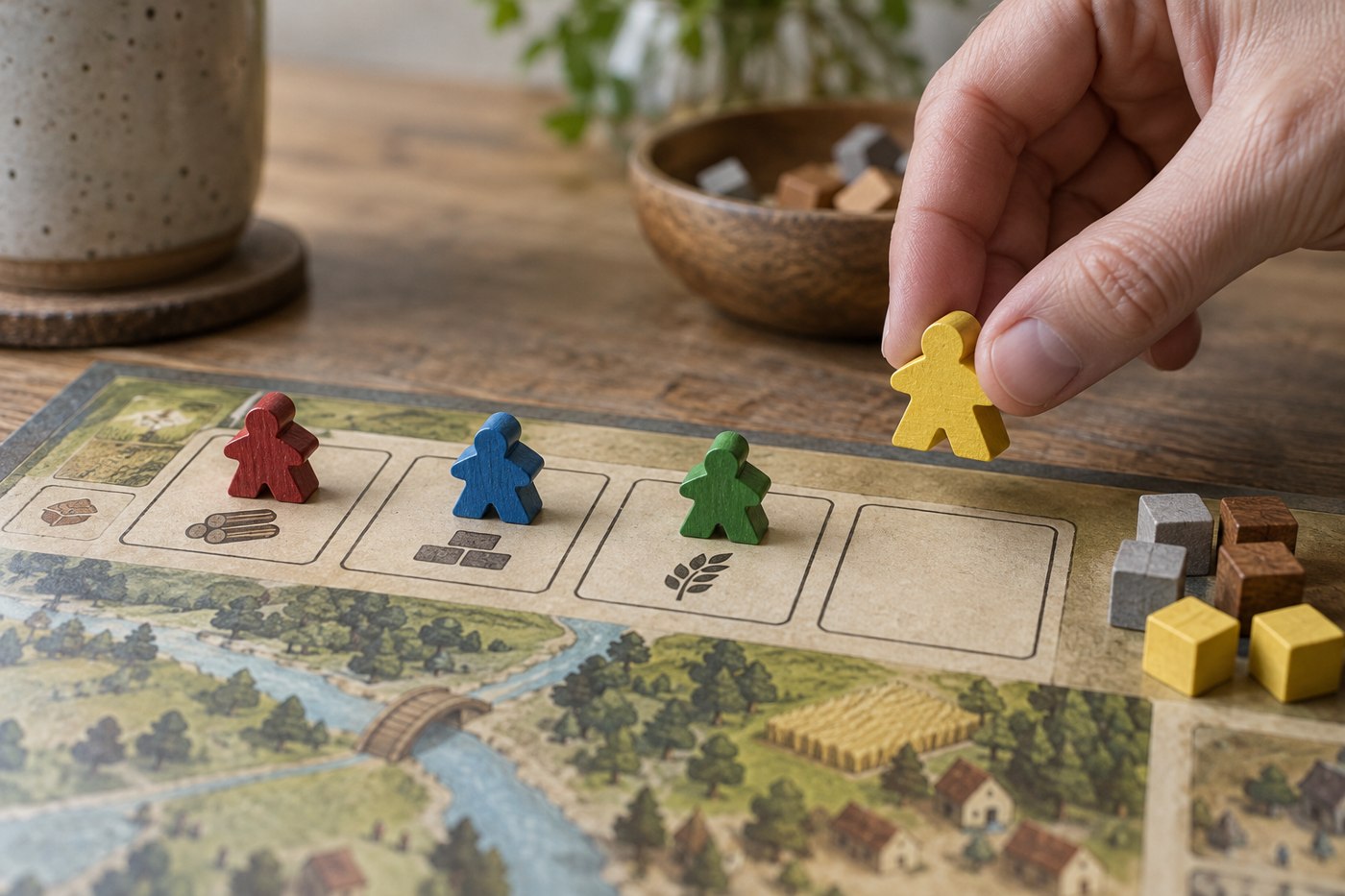
A worker is usually a way to claim an action, not a resource you spend permanently. You might place one on a forest space to collect wood, then recover it during a later cleanup. The wood remains yours while the worker becomes available again. Exact retrieval rules vary, so identify when your pieces return before planning a sequence.
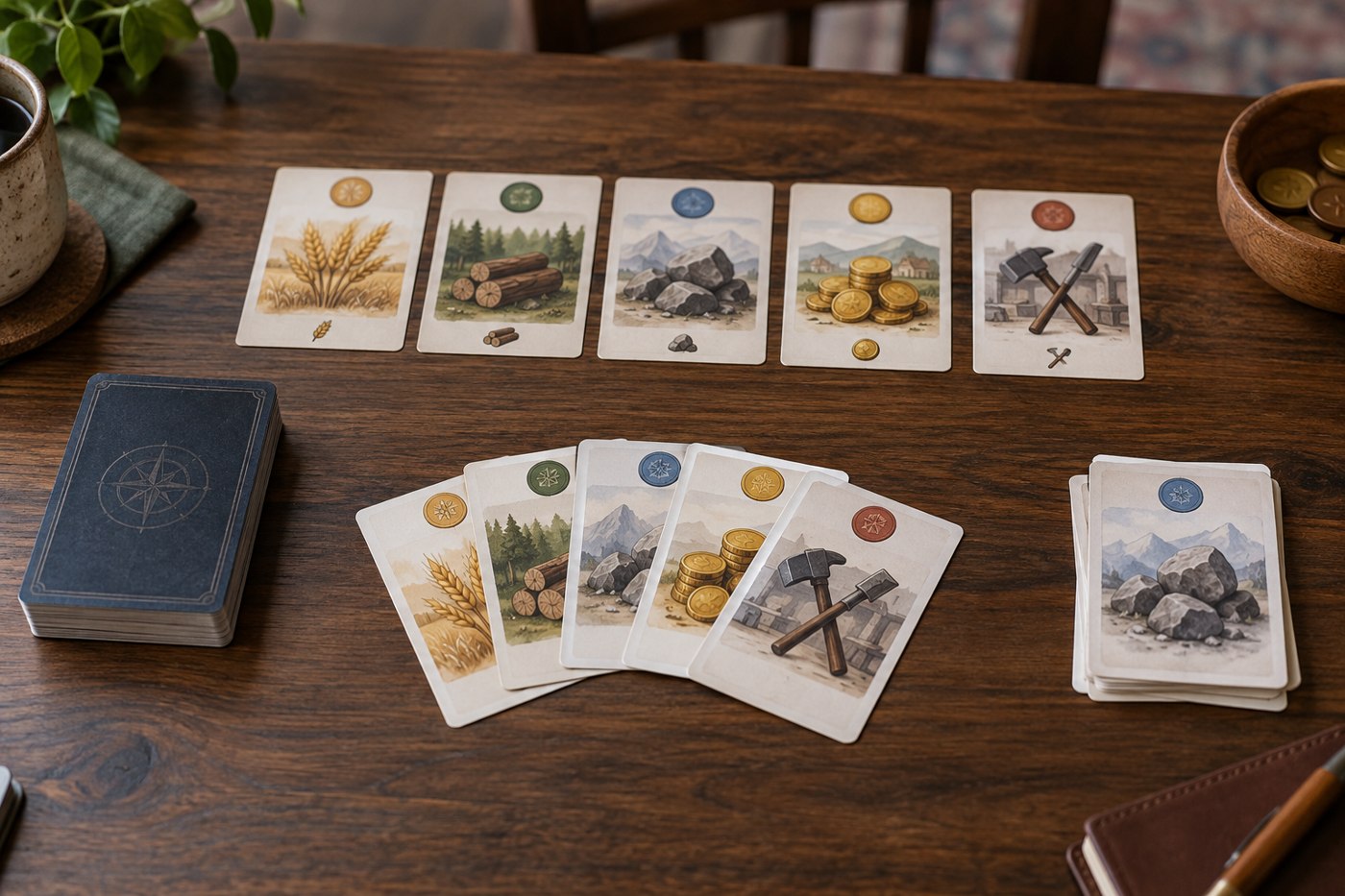
Think of an illustrative game with three workers and spaces for collecting wood, collecting stone and constructing a building. Having enough materials is only one requirement for building. You may also need an available worker and access to the construction action. A plan can fail even with a full supply of resources if all your opportunities to act have been used.
Check what an occupied space really blocks
Some spaces accept only one worker. Others have several slots, charge a higher price after the first placement or allow a special piece to bypass the normal restriction. Do not assume every occupied action is unavailable. Read the capacity symbols and the exceptions for the particular game.
When several slots offer the same action, bonuses may distinguish them. The first player might receive an extra resource while later players still take the basic action. This creates a softer competition than complete exclusion. Before worrying that a plan is impossible, check whether you have lost the action itself or merely its best reward.
Put urgent actions before flexible ones
Consider which part of your plan has the fewest substitutes. If only one remaining space gives the stone needed for a building, while three spaces give money, stone may be more urgent even if money looks more valuable in isolation. This is about the available board, not a universal rule that one resource is stronger.
Look at what other players can visibly use. Someone with enough wood and stone may also want construction; someone missing both is less likely to take it immediately unless the action serves another purpose. You cannot know every hidden objective, but public information helps distinguish a contested action from one that can probably wait.
Prepare a fallback that advances your position without relying on the same blocked space. If construction disappears, collecting a different resource or improving future income may still be productive. Recalculating the whole game from nothing every time a worker lands makes the mechanism feel more restrictive than it is.
Count the full chain of actions
A building that costs two wood may require more than the action that constructs it. You may need one placement to collect wood, another to obtain a permit and a third to build. If only two workers remain, the chain is not available this round unless another effect changes it. Count actions as carefully as materials.
Timing matters when rewards unlock later options. An extra worker acquired this round may become usable immediately, next round or only after a separate step. A discount might apply only to a particular category of action. Read those timing details before investing in an improvement whose benefit you expect to use straight away.
Balance more actions against useful actions
An additional worker can increase flexibility, but acquiring one may cost resources and actions that could have produced points. It may also create an upkeep obligation in some games. Ask how many rounds remain and whether the extra placement will have useful spaces to occupy. More workers are not automatically better at every stage.
Similarly, being first in turn order has a price in many designs. It is valuable when a scarce action matters enough to justify that price. If your next plan can use several interchangeable spaces, you may prefer the reward available elsewhere. Evaluate initiative in relation to a concrete intended action rather than treating first place as a goal on its own.
Read the round before committing
At the start of a round, identify your immediate objective, the space most likely to disappear and one alternative route. Then act on new information as placements happen. You need not predict every opponent's sequence. A short priority list helps you stay responsive without losing sight of what your resources are for.
When learning, narrate the basic exchange: place this worker, take this action, pay this cost and receive this result. Keep workers already used separate from those still available. The physical layout should make your remaining opportunities obvious, leaving your attention free for the order in which to use them.