Give food its own place
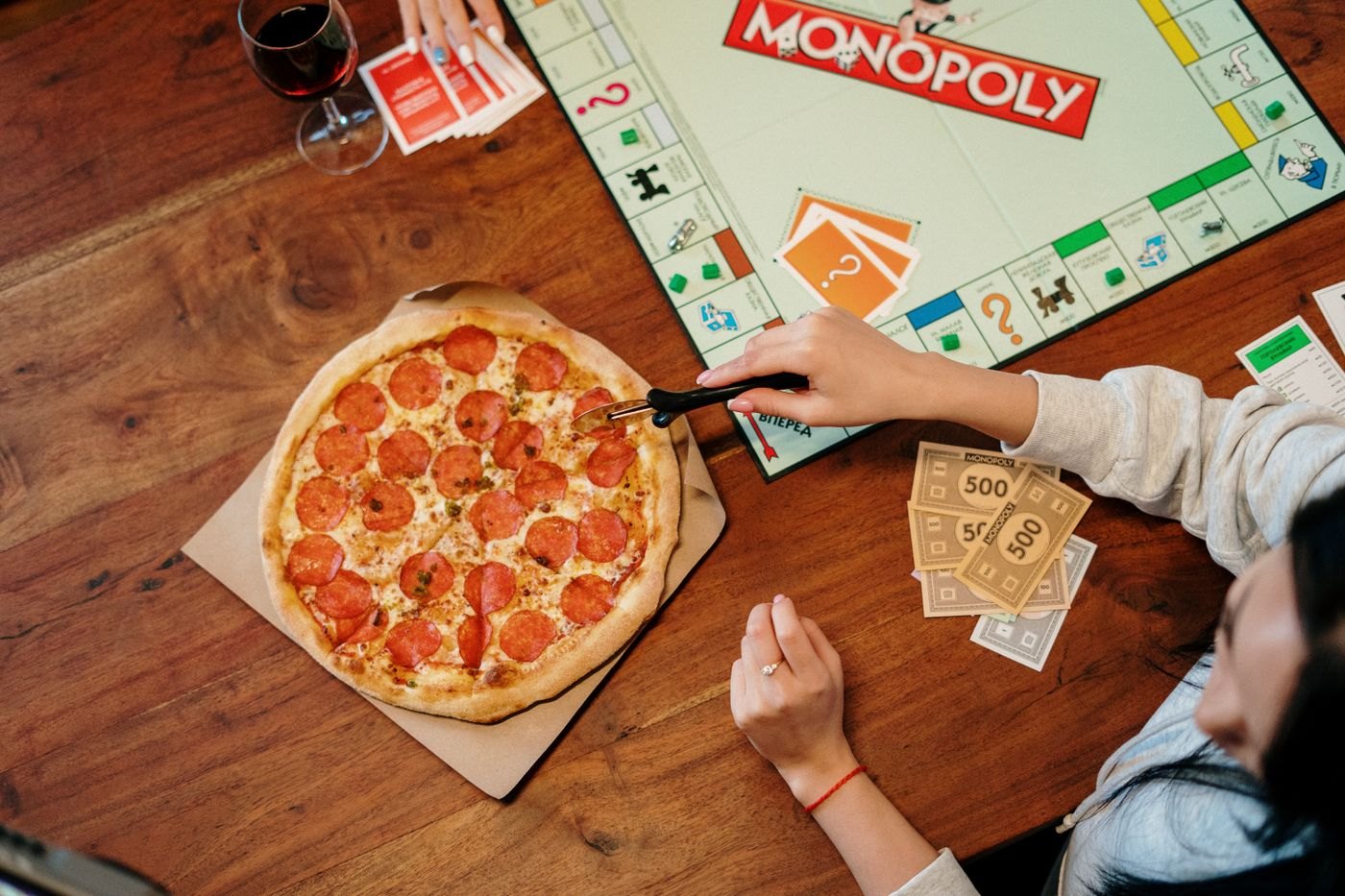
Use a side table, counter or tray away from the playing area when space allows. People can take a snack during a pause and return with clean hands. If everything must share one table, reserve a clear strip before setup and check that players still have room for their hands, discard piles and reference cards.
Choose food that is easy to portion and unlikely to drip or leave sticky residue. Ask about dietary needs before planning shared bowls. Separate serving utensils help guests avoid repeatedly touching a communal supply, and individual small plates keep crumbs away from the central board.
Put drinks where hands will not travel
A drink at the far edge may still be in the path of somebody reaching for tokens. Look at the actual movements the game requires. Place cups behind the player's working area or on another surface, away from elbows, loose sleeves and the route to a shared deck. Stable containers are preferable to narrow, easily tipped ones.
Lids can reduce some spills, but they do not make a drink harmless. Keep a cloth nearby so a small spill can be dealt with promptly. If liquid reaches components, stop moving wet pieces through the rest of the game and follow any material-specific care guidance rather than rubbing printed surfaces aggressively.
Choose a natural eating break
For a meal, pause at a clear boundary and move the game only if its state can be preserved. Taking a photo may help with a public board, but avoid exposing hidden information. A shorter game before dinner and another afterward can be simpler than protecting a sprawling setup throughout the meal.
Keep napkins and a place for rubbish within reach. If a snack leaves residue, wash and dry hands before handling cards. These small arrangements let everyone enjoy the food without constant reminders from the game's owner.