Give both an arrival and an ending
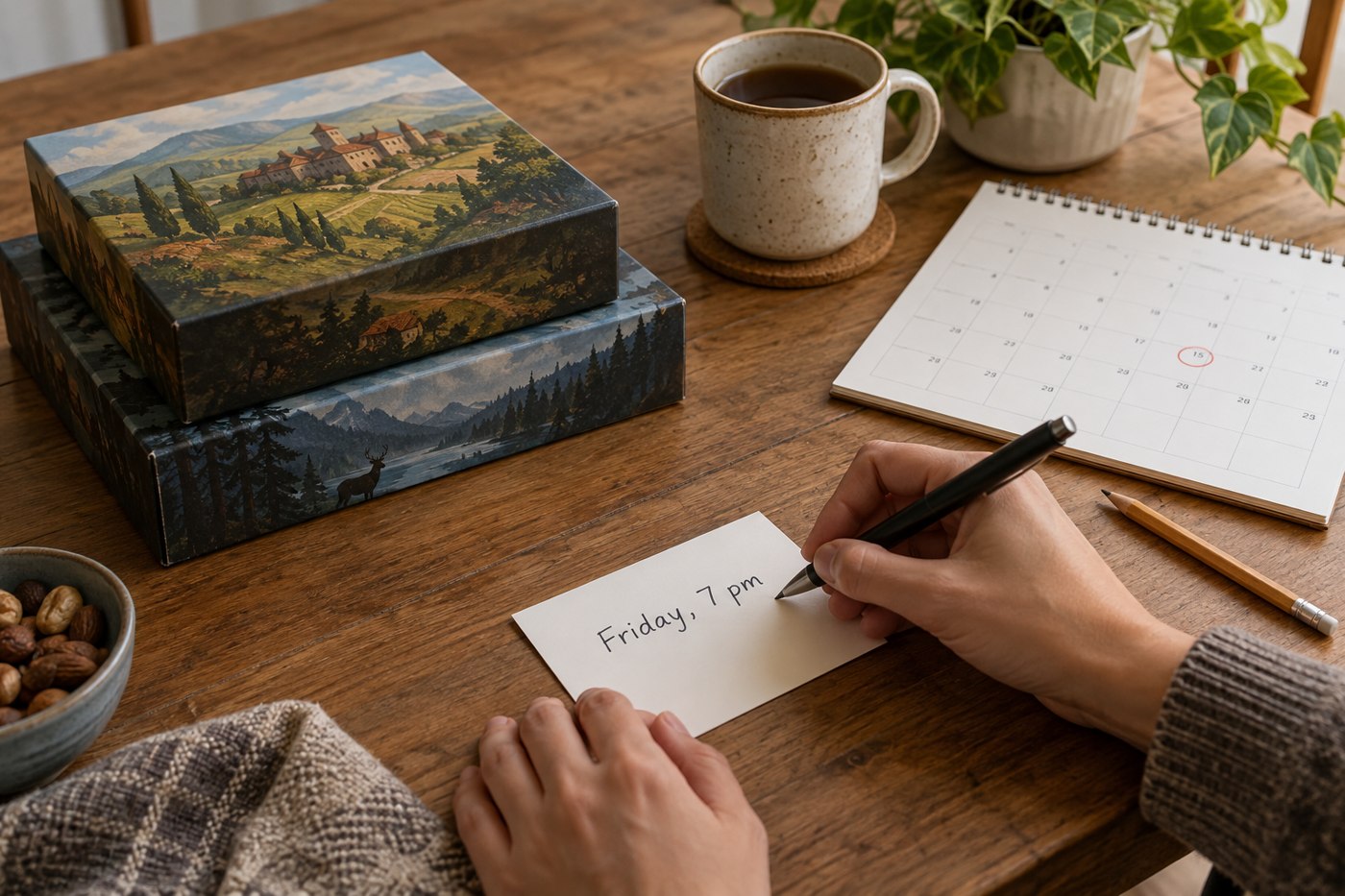
State the address, arrival window and intended finishing time. If a main game starts at a particular hour, distinguish that from the time the door opens. This helps guests plan transport and tells late arrivals whether they are likely to join the first game or the next one.
Ask people to mention a firm early departure. You can then choose a session that fits rather than discovering halfway through that an essential player must leave. If the gathering has no fixed ending, still offer an approximate plan so guests can decide how much of the evening they want to attend.
Describe the experience plainly
Say whether you expect a relaxed selection of short games, a longer strategy game or a continuing campaign. Mention if you will teach the rules. A guest should not need to guess whether previous experience is required or whether the evening revolves around a game they have never heard of.
If you suggest preparation, keep it specific and optional unless it is genuinely necessary. A short rules video may be helpful, but sending several long links can make an invitation feel like homework. If a campaign requires prior knowledge or a particular commitment, explain that before people accept.
Cover food and physical arrangements
Tell guests whether a meal, snacks or drinks are provided and ask about relevant dietary requirements. 'Bring something' is easier to act on when you name what is useful and what you already have. Avoid relying on everybody independently bringing the same snack.
Invite people to mention seating, access, reading or other practical needs privately. You do not have to list every possible accommodation in a group message. A straightforward offer to discuss what would make the evening comfortable leaves room for a person to explain without disclosing details to the whole group.
Make replies easy
Ask for a headcount by a sensible time if player numbers affect the games you can choose. Clarify whether guests can bring someone else, because one additional person may change the whole table plan. Provide a simple way to report delays on the day.
A concise invitation might say: arrive from seven, the main game starts at half past, rules will be taught, snacks are provided, and play ends by ten. Add the location and request a reply. That is enough information to make a clear decision without sending an evening's worth of instructions.